
Skin Concerns · Apgujeong, Seoul
Age Spots
Flat brown age spots examined under a dermatoscope, distinguished from growths, and cleared with Pico laser or IPL.
Skin Concerns · Apgujeong, Seoul
Age Spots
Flat brown age spots examined under a dermatoscope, distinguished from growths, and cleared with Pico laser or IPL.

Quick answer
Every plan at Oaro Dermatology Clinic begins with a 1:1 skin diagnosis by a board-certified dermatologist, so the dose, device settings and session count are set for your skin rather than a template. Meet our doctors or ask about your own skin .
At a glance
| Procedure time | 15–30 minutes |
|---|---|
| Anaesthesia | Topical numbing cream |
| Downtime | 5–10 days of crusting for lasered spots |
| Sessions | 1–3, four to six weeks apart |
| Results last | Years for treated spots; new spots can form with UV |
| Performed by | Board-certified dermatologist |
Overview
What are age spots?
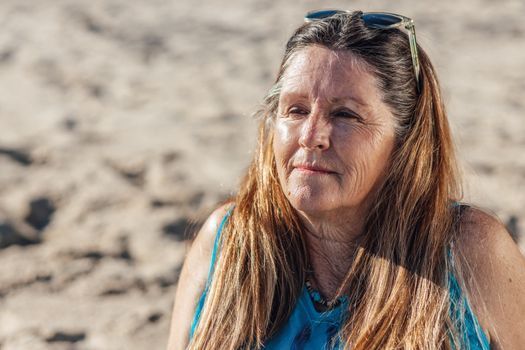
Age spots, called solar lentigines by dermatologists, are flat, tan-to-dark-brown patches with a clear edge that develop on skin that has seen the most sun over a lifetime: the cheekbones, temples, backs of the hands, forearms and upper chest. Unlike freckles they do not fade in winter, they are usually larger, and they appear in the forties and beyond. They form because repeated UV exposure causes clusters of pigment-producing cells to multiply and deposit melanin unevenly. In Korean patients they are frequently found on the upper cheeks and temples, where they can be mistaken for melasma.
Age spots themselves are benign, but they share the sun-exposed landscape with lesions that are not. Seborrheic keratoses are waxy, slightly raised growths that often sit among lentigines; flat moles can look similar; and, rarely, an irregular brown patch on an older face can be an early lentigo maligna. For this reason Oaro Dermatology Clinic treats every age spot as a diagnosis first and a cosmetic target second. You can read about the related growth on our seborrheic keratosis page and about how we assess suspicious lesions under mole check.
How age spots are treated at Oaro
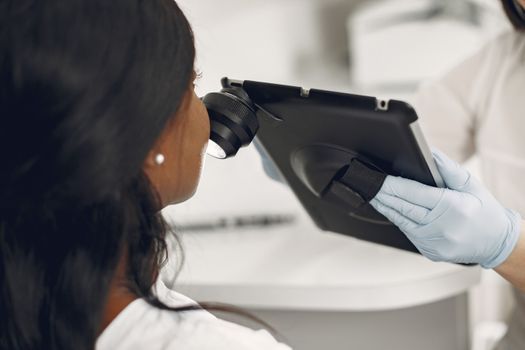
Your dermatologist in Apgujeong examines each spot with a dermatoscope and documents it with skin imaging. Confirmed lentigines are treated with the Helios 785 Pico laser, which targets pigment selectively with very little heat, or with Lumenis M22 IPL when spots are numerous across the face, hands or chest. Thickened or raised lesions are removed precisely with the CO2 laser in the same visit. Because many patients in Seoul have both spots and surrounding sun-damaged skin, your plan may add a light Erbium Fraxel pass or Rejuran to improve overall texture.
Why patients choose Oaro
- Diagnosis and treatment by a board-certified dermatologist, not a technician
- Genuine devices and products: Ultherapy, Thermage FLX, Helios Pico, Rejuran, Juvelook
- One treatment plan, written down, with aftercare and follow-up
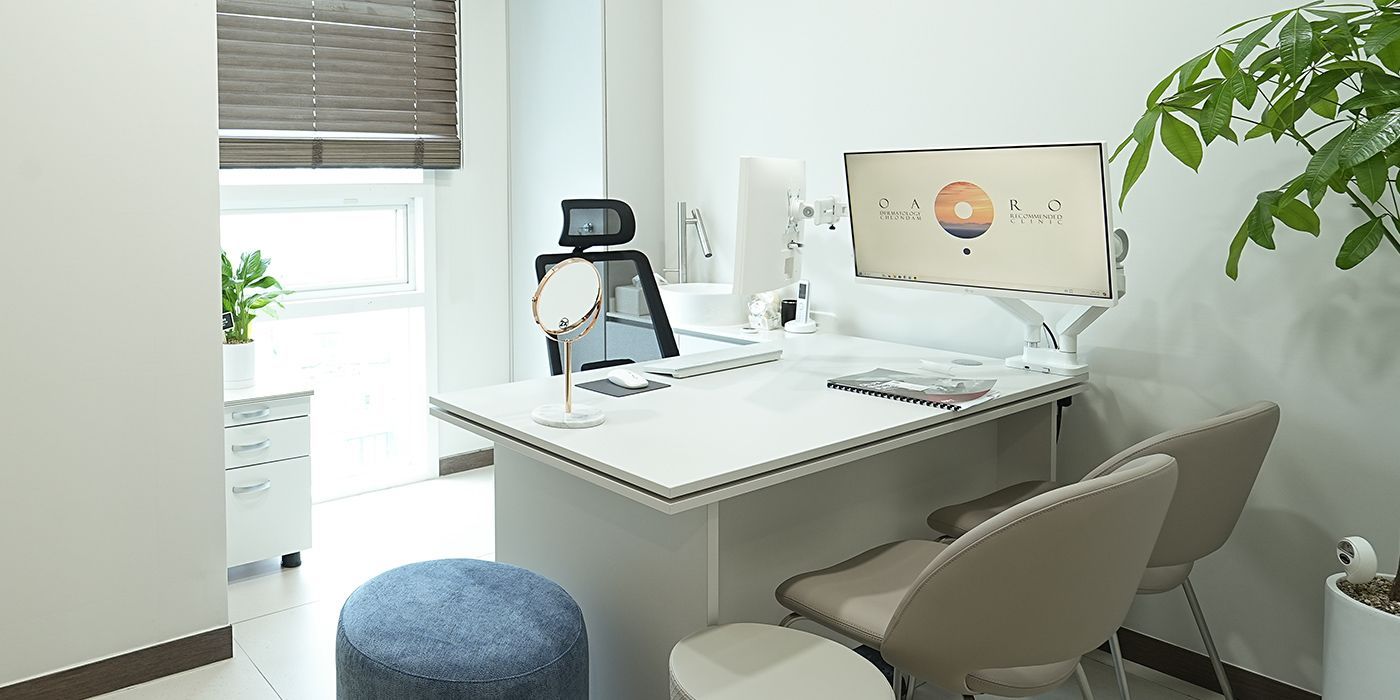
- Private 1:1 rooms in Cheongdam Tower, 8 minutes from Apgujeong Rodeo Station
- English-friendly coordination and clear, itemised pricing
Treatment goals
Common goals for age spots
Remove individual spots cleanly
Clear the most visible lentigines on the face, hands and chest with minimal risk of scarring or light marks.
Rule out anything that is not an age spot
Have each lesion assessed by a dermatologist before it is lasered.
Even out the surrounding skin
Pair spot removal with gentle toning so the treated area does not stand out as a pale island.
Slow the formation of new spots
Leave with a realistic sun-protection and maintenance plan.
Your visit
What to expect
1. Consultation & diagnosis
A board-certified dermatologist reviews your history and examines every spot under dermoscopy. Any lesion with atypical features is photographed, monitored or, if needed, biopsied before cosmetic treatment proceeds.
2. Laser treatment
After numbing cream, each confirmed age spot is treated with a few Pico laser pulses; multiple spots on the hands or chest may be covered with IPL instead. Raised seborrheic keratoses are ablated with the CO2 laser. The visit usually takes 15–30 minutes. Spots darken, crust and shed over 5–10 days.
3. Aftercare & follow-up
You receive written aftercare, a healing ointment and a care notebook. A review at four to six weeks decides whether a second session is needed. Book a consultation to arrange an assessment.
Cost guide
Age spot removal cost in Seoul
Pricing is usually per spot for a small number of lesions and per area when many spots are treated together.
| Option | Typical range (KRW) |
|---|---|
| Pico laser, per spot | 30,000 – 100,000 |
| Pico laser, face or hands (per session) | 150,000 – 350,000 |
| Lumenis M22 IPL, hands or chest (per session) | 150,000 – 300,000 |
| CO2 laser removal of raised lesions (per lesion) | 30,000 – 80,000 |
| Dermatologist consultation and dermoscopy | 30,000 – 60,000 |
Exact pricing is confirmed at consultation after examination.
Aftercare
Aftercare
- Apply the prescribed ointment to treated spots twice daily until the crusts fall off naturally.
- Protect treated areas with SPF 50+ and clothing; the hands and chest are easy to forget.
- Avoid picking, scrubbing or exfoliating for two weeks.
- Expect a pink mark after the crust sheds; it fades over several weeks.
- Report any spot that regrows or changes, as it will be re-examined.
Medically reviewed by
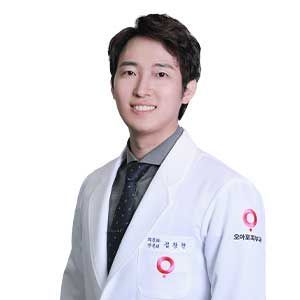
Dr. Chang-hyun Kim, M.D.
Board-certified dermatologist and Representative Director of Oaro Dermatology Clinic, Cheongdam. Ulthera Certified Treatment Provider, Thermage FLX Master Certified, and full member of the Korean Dermatological Association, the Korean Society for Dermatologic Laser and the Korean Filler Society.
FAQ
Frequently asked questions
What is the difference between age spots and freckles?
Age spots appear later in life, are larger and persist year-round; freckles start in childhood and fade without sun.
Can age spots become cancerous?
True lentigines do not, but look-alike lesions can, which is why a dermatologist examines each spot before treatment.
How many sessions does age spot removal take?
Most spots clear in one or two Pico laser sessions; very dark or thick spots may need a third.
Can age spots on the hands be treated?
Yes. Hands respond well to Pico laser and IPL, often combined with hand rejuvenation treatments.
Will the spots come back?
Treated spots rarely return, but new ones can form on sun-exposed skin without daily protection.
Explore related care
Often considered together
- Skin Concerns — browse every concern we treat
- Pico Laser — precise pigment removal
- Hand Rejuvenation — for spots and thinning on the hands
- Seborrheic Keratosis — the raised growth often mistaken for an age spot
- Sun Damage — the wider picture of photoaged skin
- Contact & Booking — book a consultation
Private 1:1 consultation
Plan your treatment with a board-certified dermatologist in Apgujeong
Tell us what you would like to change, and we will examine your skin, explain the options and give you a written plan with clear pricing. English-speaking coordinators are available for international patients.