
Hair & Scalp · Apgujeong, Seoul
Male Hair Loss
Dermatologist-led diagnosis and treatment of male pattern hair loss, from prescription therapy to scalp care.

Hair & Scalp · Apgujeong, Seoul
Male Hair Loss
Dermatologist-led diagnosis and treatment of male pattern hair loss, from prescription therapy to scalp care.

Quick answer
Medical dermatology at Oaro Dermatology Clinic is led by board-certified dermatologists who diagnose first and treat second. Korean National Health Insurance may apply to covered conditions for insured residents. Meet our doctors or book a same-week appointment .
At a glance
| Procedure time | Consultation and scalp examination 20–30 minutes; scalp injections 15–20 minutes |
|---|---|
| Anaesthesia | None for consultation; topical numbing for scalp injections |
| Downtime | None |
| Sessions | Ongoing medical therapy; review every 3–6 months |
| Results last | Maintained while treatment continues |
| Performed by | Board-certified dermatologist |
Overview
What is male hair loss?
Male pattern hair loss, or androgenetic alopecia, is the most common cause of thinning in men. Hair follicles that are genetically sensitive to dihydrotestosterone (DHT) gradually miniaturise, producing finer, shorter hairs at the temples and crown. It is progressive, but it is also one of the better-understood conditions in dermatology, and earlier treatment typically preserves more hair than later treatment.
Not every man who notices shedding has pattern hair loss. Sudden, diffuse shedding may be telogen effluvium after illness, stress or a medication change; patchy loss may be alopecia areata; an inflamed, flaky scalp may point to seborrheic dermatitis. Because these conditions are treated very differently, a dermatologist's examination matters more than a pharmacy guess. If you are losing hair quickly, seeing bald patches, or have scalp pain, itching or scaling, it is sensible to book an assessment.
How male hair loss is treated at Oaro
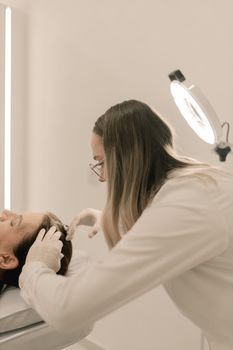
Oaro Dermatology Clinic in Apgujeong, Seoul treats hair loss as a medical condition first. A board-certified dermatologist examines the scalp under magnification, looks at the pattern and density of miniaturised hairs, and asks about family history, medications and recent health changes. Where the history suggests a thyroid, iron or hormonal contributor, blood tests may be ordered.
For confirmed androgenetic alopecia, treatment usually combines oral finasteride or a related 5-alpha-reductase inhibitor with topical minoxidil. Supportive in-clinic options such as scalp PRP or growth-factor injections and low-level light may be added for men who want to accelerate density. Everything is reviewed at follow-up, with photographs taken at the same angles so progress is measured rather than guessed. You can read about the wider range of medical skin services on the medical dermatology hub or book a consultation directly.
Why patients choose Oaro
- Board-certified dermatologists for medical and cosmetic skin care under one roof
- Dermoscopy, allergy and scalp assessment before any prescription
- Written treatment plan, home-care guidance and follow-up
- Private rooms in Cheongdam Tower, 8 minutes from Apgujeong Rodeo Station
- English-friendly coordination for visitors and expats
Treatment goals
Common goals for male hair loss treatment
Slow or stop further thinning
The first aim is to protect the hair you still have. Prescription therapy typically stabilises shedding within three to six months in most men who stay consistent.
Regrow density at the crown and hairline
Miniaturised follicles that are still alive may thicken again with combined oral and topical therapy, producing visibly fuller coverage over 6–12 months.
Treat the scalp, not just the hair
Dandruff, oiliness and inflammation can worsen shedding. Treating the scalp environment supports the medical plan.
A plan you can sustain
Hair loss treatment is long-term, so the dermatologist in Apgujeong designs a routine that fits your lifestyle and budget.
Your visit
What to expect
1. Consultation & diagnosis
Your dermatologist reviews your history, examines the scalp with a dermoscope, and photographs the crown, hairline and vertex. If another cause is suspected, blood tests or a scalp biopsy may be arranged. You receive a clear explanation of the diagnosis and the options.
2. Prescription and in-clinic treatment
Most men begin oral finasteride or dutasteride plus topical minoxidil. Contraindications, side effects and monitoring are discussed before anything is prescribed. If you choose to add scalp PRP or growth-factor injections, numbing cream is applied, and the session takes around 20 minutes with no downtime. Medicated shampoos or scalp treatments are added where seborrheic dermatitis or dandruff is present.
3. Aftercare & follow-up
You leave with written instructions and a care notebook. A review at three months checks tolerance and early shedding; photographs at six and twelve months track density. The plan is adjusted as your scalp responds.
Cost & insurance
Male hair loss treatment cost in Seoul
Androgenetic alopecia is generally considered a cosmetic condition under Korean National Health Insurance, so consultations and prescriptions for pattern hair loss are usually self-pay. Where the dermatologist diagnoses an inflammatory or medical cause such as alopecia areata or scalp dermatitis, insured residents may have part of the diagnosis and treatment covered. International visitors pay the clinic's self-pay rates.
| Option | Typical range (KRW) |
|---|---|
| Initial consultation and scalp examination | 30,000 – 80,000 |
| Oral prescription (per month, pharmacy) | 20,000 – 70,000 |
| Scalp PRP / growth-factor injection (per session) | 150,000 – 400,000 |
Exact pricing is confirmed at consultation after examination.
Home care
Aftercare
- Take oral medication at the same time each day; missed doses reduce results.
- Apply minoxidil to a dry scalp twice daily and allow it to dry before bed.
- Expect a temporary increase in shedding in the first 4–8 weeks; this usually settles.
- Use a gentle or medicated shampoo as advised and avoid harsh scalp scrubbing.
- Keep follow-up appointments so your dermatologist can compare photographs and adjust the plan.
Medically reviewed by
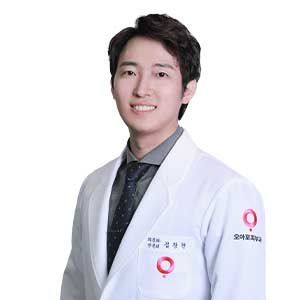
Dr. Chang-hyun Kim, M.D.
Board-certified dermatologist and Representative Director of Oaro Dermatology Clinic, Cheongdam. Full member of the Korean Dermatological Association, the Korean Society of Atopic Dermatitis, the Korean Society of Vitiligo & Pigmentation and the Korean Society of Acne & Rosacea.
FAQ
Frequently asked questions
What causes hair loss in men?
Most male hair loss is hereditary androgenetic alopecia, driven by follicle sensitivity to DHT. Stress, illness, nutritional deficiency, thyroid disease and scalp conditions may also contribute and are checked during consultation.
Can male pattern hair loss be reversed?
Partially, in many men. Follicles that are miniaturised but still active may regrow thicker hair with treatment, while follicles that have fully closed do not. Results depend on how early treatment starts.
How long before I see results?
Shedding typically slows within three to six months, and visible density improvement usually takes six to twelve months of consistent use.
Do I need to take medication for life?
Benefits are maintained only while treatment continues. Stopping generally leads to gradual return of thinning over 6–12 months.
Can international visitors get a hair loss prescription in Seoul?
Yes. After examination, a dermatologist at Oaro Dermatology Clinic may prescribe suitable medication, which you collect from a nearby pharmacy in Apgujeong.
Explore related care
Related conditions and treatments
- Finasteride — the main oral prescription for male pattern hair loss
- Minoxidil — topical therapy that pairs with oral treatment
- Alopecia Areata — patchy hair loss that needs a different approach
- Seborrheic Dermatitis — scalp inflammation that can worsen shedding
- PRP Therapy — supportive scalp injections for density
- Medical Dermatology — all medical skin and scalp services
Same-week appointments
See a board-certified dermatologist in Apgujeong
Bring your questions, medication list and any photos of flare-ups. We will examine your skin, explain the diagnosis and give you a written plan. English-speaking coordinators are available for international patients and expats.