
Hair & Scalp · Apgujeong, Seoul
Finasteride
Prescription-only oral therapy for male pattern hair loss, prescribed after a dermatologist’s examination.

Hair & Scalp · Apgujeong, Seoul
Finasteride
Prescription-only oral therapy for male pattern hair loss, prescribed after a dermatologist’s examination.

Quick answer
Medical dermatology at Oaro Dermatology Clinic is led by board-certified dermatologists who diagnose first and treat second. Korean National Health Insurance may apply to covered conditions for insured residents. Meet our doctors or book a same-week appointment .
At a glance
| Procedure time | Consultation 20–30 minutes; prescription collected at a pharmacy |
|---|---|
| Anaesthesia | Not applicable |
| Downtime | None |
| Sessions | Daily tablet; review at 3 and 6 months, then every 6–12 months |
| Results last | Maintained while medication continues |
| Performed by | Board-certified dermatologist |
Overview
What is finasteride?
Finasteride is an oral 5-alpha-reductase inhibitor. It reduces the conversion of testosterone to dihydrotestosterone (DHT), the androgen that causes genetically susceptible follicles to miniaturise in male pattern hair loss. Daily 1 mg finasteride has been studied for decades and, in most men, slows shedding and increases hair count on the crown and mid-scalp. A related medicine, dutasteride, blocks both forms of the enzyme and is also used in Korea.
Finasteride is a prescription medicine, not a supplement. It is not suitable for everyone: it should not be taken by women who are or may become pregnant, and crushed or broken tablets should not be handled by them; it is not used in children; and caution is needed with liver disease, a history of depression or certain prostate conditions. Possible side effects, usually uncommon, include reduced libido, erectile changes, breast tenderness and mood changes. It also lowers PSA readings, which matters for prostate screening. Men planning a family may wish to discuss timing.
How finasteride is prescribed at Oaro
At Oaro Dermatology Clinic in Apgujeong, Seoul, finasteride is prescribed only after examination. A board-certified dermatologist confirms that your hair loss is androgenetic rather than alopecia areata, telogen effluvium or a scalp condition, then goes through your medical history, medications and the contraindications above. If finasteride is appropriate, you receive a prescription to fill at a nearby pharmacy and a written plan that usually pairs it with topical minoxidil. Follow-up visits check tolerance and progress. Browse the medical dermatology hub for related conditions or book a consultation.

Why patients choose Oaro
- Board-certified dermatologists for medical and cosmetic skin care under one roof
- Dermoscopy, allergy and scalp assessment before any prescription
- Written treatment plan, home-care guidance and follow-up
- Private rooms in Cheongdam Tower, 8 minutes from Apgujeong Rodeo Station
- English-friendly coordination for visitors and expats
Treatment goals
Common goals for finasteride treatment
Halt progression
The primary aim is to stop further miniaturisation so the hairline and crown do not continue to recede.
Regrow crown and vertex density
Many men see measurable thickening after 6–12 months of consistent daily use.
Safe, monitored use
Prescribing after examination and reviewing side effects at follow-up keeps treatment appropriate for you.
Combine with other therapies
Finasteride works alongside minoxidil and supportive scalp treatments as part of a long-term plan.
Your visit
What to expect
1. Consultation & diagnosis
Your dermatologist examines the scalp with a dermoscope, photographs the pattern, and asks about family history, sexual health, mood, liver health and family planning. If the diagnosis is unclear, blood tests or further assessment come first.
2. Prescription and start of treatment
When finasteride is suitable, you receive a prescription for a daily 1 mg tablet, or dutasteride where the dermatologist judges it more appropriate. The clinic explains how to take it, what early shedding looks like, and which side effects to report. Prescriptions in Korea are filled at an external pharmacy, and short-stay visitors can discuss supply duration at the visit.
3. Aftercare & follow-up
A review at three months checks tolerance; photographs at six and twelve months track hair count. Dose or combination therapy is adjusted as needed, and you can stop at any time after discussion.
Cost & insurance
Finasteride cost in Seoul
Finasteride for pattern hair loss is generally not covered by Korean National Health Insurance because the condition is classified as cosmetic. Both residents and international visitors pay self-pay rates for the consultation, and the medication is paid for at the pharmacy. Generic Korean finasteride is widely available and relatively affordable.
| Option | Typical range (KRW) |
|---|---|
| Initial consultation and scalp examination | 30,000 – 80,000 |
| Finasteride 1 mg, per month (pharmacy, generic to branded) | 15,000 – 60,000 |
| Follow-up visit | 10,000 – 40,000 |
Exact pricing is confirmed at consultation after examination.
Home care
Aftercare
- Take one tablet daily at a consistent time, with or without food.
- Do not share tablets; keep them away from women who are or may become pregnant.
- Report any sexual, mood or breast changes promptly so the plan can be reviewed.
- Tell any doctor ordering a PSA test that you take finasteride.
- Continue minoxidil and scalp care as advised; stopping finasteride reverses gains over months.
Medically reviewed by
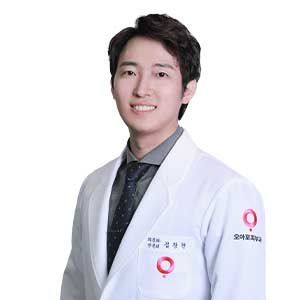
Dr. Chang-hyun Kim, M.D.
Board-certified dermatologist and Representative Director of Oaro Dermatology Clinic, Cheongdam. Full member of the Korean Dermatological Association, the Korean Society of Atopic Dermatitis, the Korean Society of Vitiligo & Pigmentation and the Korean Society of Acne & Rosacea.
FAQ
Frequently asked questions
Does finasteride really work for hair loss?
In clinical studies most men taking 1 mg daily had slowed hair loss, and a majority showed increased hair count after one to two years. Individual results vary.
What are the side effects of finasteride?
Uncommon side effects include reduced libido, erectile difficulty, ejaculation changes, breast tenderness and low mood. Most resolve on stopping; report any concern to your dermatologist.
Can women take finasteride?
Finasteride is not prescribed to women who are or may become pregnant because it can affect a male foetus. Post-menopausal use is considered only case by case by a dermatologist.
Do I need a prescription for finasteride in Korea?
Yes. Finasteride is prescription-only. At Oaro Dermatology Clinic in Apgujeong it is prescribed after examination, and you collect it from a pharmacy.
How long until finasteride shows results?
Shedding often slows by three to six months, and visible density gains usually take six to twelve months.
Explore related care
Related conditions and treatments
- Male Hair Loss — the condition finasteride treats
- Minoxidil — topical partner therapy
- Female Hair Loss — why women need different options
- Seborrheic Dermatitis — scalp inflammation to treat alongside
- Medical Dermatology — all medical skin and scalp services
Same-week appointments
See a board-certified dermatologist in Apgujeong
Bring your questions, medication list and any photos of flare-ups. We will examine your skin, explain the diagnosis and give you a written plan. English-speaking coordinators are available for international patients and expats.