
General Dermatology · Apgujeong, Seoul
Mole Check
Dermoscopic mole assessment, with safe removal or biopsy when a mole is changing or unwanted.
General Dermatology · Apgujeong, Seoul
Mole Check
Dermoscopic mole assessment, with safe removal or biopsy when a mole is changing or unwanted.

Quick answer
Medical dermatology at Oaro Dermatology Clinic is led by board-certified dermatologists who diagnose first and treat second. Korean National Health Insurance may apply to covered conditions for insured residents. Meet our doctors or book a same-week appointment .
At a glance
| Procedure time | Assessment 10–20 minutes; removal 10–30 minutes |
|---|---|
| Anaesthesia | Numbing cream or local injection for removal |
| Downtime | 5–10 days of crusting after laser; 1–2 weeks with sutures after excision |
| Sessions | Usually 1; deep moles may need a second laser session |
| Results last | Removed moles rarely recur; new moles can appear over time |
| Performed by | Board-certified dermatologist |
Overview
What is a mole check?
Moles (melanocytic naevi) are clusters of pigment cells. Most are harmless, but a small number are atypical and a very few are melanoma, a skin cancer that is highly curable when caught early. The ABCDE rule is a useful home guide: Asymmetry, irregular Border, more than one Colour, Diameter over 6 mm, and Evolution, meaning any change. The "ugly duckling" sign, a mole that looks different from all your others, matters as much. In East Asian skin, melanoma most often arises on the soles, palms and under nails, so a new dark streak in a nail or a spot on the foot deserves attention.
You should see a dermatologist if a mole is changing, itching, bleeding or crusting, if it appeared after the age of 30, if it looks different from your others, or simply if it bothers you and you would like it removed safely. Moles should never be lasered or treated with over-the-counter removers without a dermatologist first confirming they are benign.
How a mole check works at Oaro
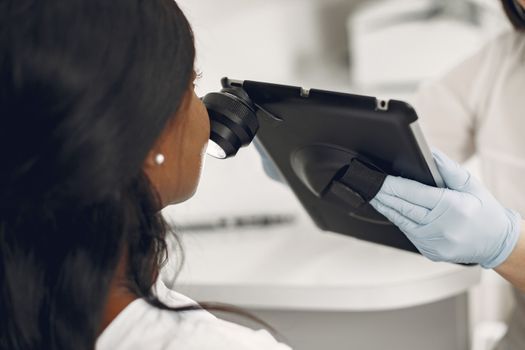
At Oaro Dermatology Clinic in Apgujeong, Seoul, a board-certified dermatologist examines each mole with a dermatoscope, which shows the pigment network, dots, globules and vessels that distinguish benign from suspicious lesions far more reliably than the naked eye. Benign moles you want to keep are photographed for comparison, ideally as part of a full skin check-up. Benign raised moles can be removed for cosmetic reasons with the CO2 or Erbium laser, which vaporises the lesion precisely with minimal scarring, in the same way as a seborrhoeic keratosis. Any mole with atypical features is removed by shave or elliptical excision under local anaesthetic and sent for histology, because laser treatment destroys the tissue needed for diagnosis. Fine-line scars can later be refined with CO2 laser resurfacing if needed. Every decision and photograph is kept in your care notebook.

Why patients choose Oaro
- Board-certified dermatologists for medical and cosmetic skin care under one roof
- Dermoscopy, allergy and scalp assessment before any prescription
- Written treatment plan, home-care guidance and follow-up
- Private rooms in Cheongdam Tower, 8 minutes from Apgujeong Rodeo Station
- English-friendly coordination for visitors and expats
Treatment goals
Common goals for a mole check
Rule out melanoma
Dermoscopy identifies the structural features that separate benign naevi from lesions needing biopsy.
Monitor rather than over-treat
Photographic comparison allows stable moles to be left alone with confidence.
Remove unwanted moles cleanly
Laser ablation for benign raised moles leaves minimal marks on the face and body.
Diagnose with certainty
Anything atypical is excised and examined under the microscope so that nothing is guessed.
Your visit
What to expect
1. Consultation & diagnosis
Your dermatologist asks how long the mole has been present and whether it has changed, then examines it and the surrounding skin with dermoscopy. A photograph with a scale marker is taken for your record.
2. Treatment
For benign moles you wish to remove, numbing cream or a tiny local injection is applied and the lesion is vaporised with the CO2 or Erbium laser in minutes. For atypical moles, a shave or elliptical excision is performed under local anaesthetic at Oaro Dermatology Clinic and the tissue is sent for histology.
3. Aftercare & follow-up
A protective ointment and dressing are applied. Laser sites crust and heal in about a week; sutures are removed after five to ten days depending on the site. Histology results are reviewed with you within one to two weeks.
Cost & insurance
Mole check and removal cost in Seoul
Assessment and biopsy of a suspicious mole are medical care, and Korean National Health Insurance may cover them for insured residents. Removal of a benign mole for cosmetic reasons is self-pay for everyone, with pricing per lesion.
| Option | Typical range (KRW) |
|---|---|
| Dermoscopic mole assessment (self-pay) | 30,000–80,000 |
| Laser removal of a benign mole, per lesion | 30,000–100,000 |
| Surgical excision with histology | 150,000–400,000 |
| Multiple-mole laser package (face) | 200,000–600,000 |
Exact pricing is confirmed at consultation after examination.
Home care
Aftercare
- Keep the treated site covered with the prescribed ointment and dressing for the first few days.
- Do not pick the crust; let it fall away on its own, usually within 7–10 days.
- Avoid swimming, saunas and heavy sweating until the skin has closed.
- Apply SPF 50 sunscreen to the healed site for at least three months to prevent a dark mark.
- Contact the clinic if the site becomes increasingly red, painful or oozes after the first two days.
Medically reviewed by
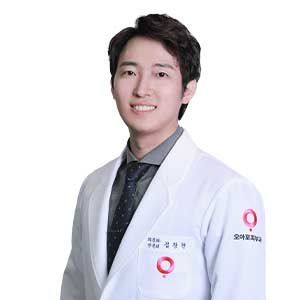
Dr. Chang-hyun Kim, M.D.
Board-certified dermatologist and Representative Director of Oaro Dermatology Clinic, Cheongdam. Full member of the Korean Dermatological Association, the Korean Society of Atopic Dermatitis, the Korean Society of Vitiligo & Pigmentation and the Korean Society of Acne & Rosacea.
FAQ
Frequently asked questions
Can a mole be removed by laser safely?
Yes, if a dermatologist has first confirmed with dermoscopy that it is benign; suspicious moles must be excised and examined instead.
Will mole removal leave a scar?
Laser removal usually leaves a faint, flat mark that fades over months; excision leaves a fine line that can be refined later if needed.
Do removed moles grow back?
Deep moles occasionally show some repigmentation and may need a second laser session; excised moles rarely return.
Should I be worried about a mole on my foot?
Soles and palms are the most common melanoma sites in Asian skin, so any new or changing spot there should be checked.
How many moles can be removed in one visit?
Several benign moles can be treated in one session in Apgujeong; your dermatologist will advise on comfort and healing.
Explore related care
Related conditions and treatments
- Medical Dermatology — all medical skin conditions treated at Oaro
- Skin Check-Up — a full-body examination with mole mapping
- Seborrheic Keratosis — benign growths often mistaken for moles
- Skin Tags — soft growths removed in minutes
- CO2 Laser Resurfacing — the laser used for precise lesion removal
- Contact & Booking — book a mole assessment in Seoul
Same-week appointments
See a board-certified dermatologist in Apgujeong
Bring your questions, medication list and any photos of flare-ups. We will examine your skin, explain the diagnosis and give you a written plan. English-speaking coordinators are available for international patients and expats.