
General Dermatology · Apgujeong, Seoul
Skin Tags
Quick, clean removal of skin tags on the neck, eyelids and body folds by a dermatologist.
General Dermatology · Apgujeong, Seoul
Skin Tags
Quick, clean removal of skin tags on the neck, eyelids and body folds by a dermatologist.

Quick answer
Medical dermatology at Oaro Dermatology Clinic is led by board-certified dermatologists who diagnose first and treat second. Korean National Health Insurance may apply to covered conditions for insured residents. Meet our doctors or book a same-week appointment .
At a glance
| Procedure time | 5–20 minutes depending on the number of tags |
|---|---|
| Anaesthesia | Numbing cream or a tiny local injection |
| Downtime | 3–7 days of small crusts |
| Sessions | 1 |
| Results last | Treated tags do not return; new ones may form over time |
| Performed by | Board-certified dermatologist |
Overview
What are skin tags?
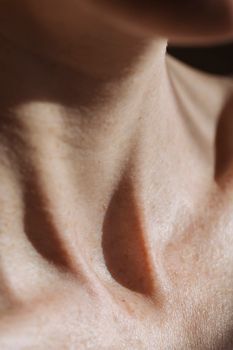
Skin tags are small outgrowths of normal skin containing loose collagen and tiny blood vessels. They range from a millimetre to the size of a grape and develop where friction is constant: the sides of the neck under collars and necklaces, the armpits, beneath the breasts, the groin and the eyelids. They become more common with age, during pregnancy, with weight gain and in people with insulin resistance, and there is often a family tendency. They are benign, not contagious and never turn into cancer.
Most people seek removal because tags catch on jewellery or razors, twist and become sore, or are simply visible in a way they dislike. You should see a dermatologist rather than treating at home if a growth is dark, firm, bleeding, growing quickly or changing, because warts, moles, seborrhoeic keratoses and occasionally skin cancers can be mistaken for tags. Tying off or cutting tags yourself risks infection, bleeding and scarring, and may delay the diagnosis of something that was not a tag at all.
How skin tags are removed at Oaro
At Oaro Dermatology Clinic in Apgujeong, Seoul, a board-certified dermatologist first checks each lesion with dermoscopy, as for a seborrhoeic keratosis or a mole check, so that only true skin tags are treated without histology. Numbing cream is applied, or a tiny injection for larger tags. Small tags are removed with the CO2 laser, which seals the base as it cuts and leaves little more than a pinpoint crust; larger stalked tags are snipped at the base with sterile scissors and the base sealed. Eyelid tags are treated with particular care around the lash line. Dozens of tags can be cleared in one visit, and the appointment can be combined with a full skin check-up. You leave with written aftercare in your care notebook.

Why patients choose Oaro
- Board-certified dermatologists for medical and cosmetic skin care under one roof
- Dermoscopy, allergy and scalp assessment before any prescription
- Written treatment plan, home-care guidance and follow-up
- Private rooms in Cheongdam Tower, 8 minutes from Apgujeong Rodeo Station
- English-friendly coordination for visitors and expats
Treatment goals
Common goals for skin tag removal
Confirm the diagnosis
A quick dermoscopic look ensures a mole or other lesion is not mistaken for a tag.
Remove without a mark
Laser or snip removal at the stalk leaves minimal trace once the small crust has fallen off.
Treat many at once
Neck, armpit and body-fold tags can all be cleared in a single short appointment.
Stop the irritation
Removing tags that catch on clothing or jewellery ends the cycle of twisting, soreness and bleeding.
Your visit
What to expect
1. Consultation & diagnosis
Your dermatologist examines the tags with dermoscopy and counts them, noting any lesion that needs a different approach. Areas to be treated are photographed.
2. Treatment
Numbing cream is applied for 20–30 minutes, or a tiny local injection is used. At Oaro Dermatology Clinic each tag is then removed by CO2 laser or snip excision in seconds; a session of many tags takes under 20 minutes. A thin layer of healing ointment is applied.
3. Aftercare & follow-up
Small crusts form and drop off within a week. A follow-up visit is rarely needed, but photographs can be sent to the clinic if you have any concern while healing.
Cost & insurance
Skin tag removal cost in Seoul
Removal of skin tags is considered cosmetic and is self-pay for everyone, including insured residents, unless a lesion requires diagnosis or biopsy, in which case Korean National Health Insurance may apply. Pricing is per lesion or by package, with eyelid tags priced higher for the precision involved.
| Option | Typical range (KRW) |
|---|---|
| Consultation and dermoscopy (self-pay) | 30,000–60,000 |
| Small skin tag, per lesion | 10,000–30,000 |
| Multiple-tag package (neck or armpits) | 100,000–300,000 |
| Eyelid tag, per lesion | 50,000–100,000 |
Exact pricing is confirmed at consultation after examination.
Home care
Aftercare
- Apply the healing ointment twice daily until the crusts fall off, usually within a week.
- Avoid necklaces, tight collars and shaving over treated areas for a few days.
- Keep the sites clean; showering is fine from the next day, but avoid soaking, saunas and swimming for five days.
- Do not pick crusts; let them separate on their own to avoid marks.
- Apply sunscreen to treated neck or chest skin for several weeks to prevent dark spots.

Medically reviewed by
Dr. Chang-hyun Kim, M.D.
Board-certified dermatologist and Representative Director of Oaro Dermatology Clinic, Cheongdam. Full member of the Korean Dermatological Association, the Korean Society of Atopic Dermatitis, the Korean Society of Vitiligo & Pigmentation and the Korean Society of Acne & Rosacea.
FAQ
Frequently asked questions
Why do I get skin tags?
Friction, age, genetics, hormonal changes and insulin resistance all contribute; they are not caused by poor hygiene or infection.
Can I remove skin tags at home?
It is not advised. Home removal risks bleeding, infection and scarring, and a lesion that is not a tag may be missed.
Does removal hurt?
With numbing cream or local anaesthetic, most people feel only a brief pinch.
Will skin tags grow back?
A fully removed tag does not regrow, but new tags can appear elsewhere over the years.
Can eyelid skin tags be removed safely?
Yes. A dermatologist removes them with fine instruments or the CO2 laser while protecting the eye.
Explore related care
Related conditions and treatments
- Medical Dermatology — all medical skin conditions treated at Oaro
- Seborrheic Keratosis — waxy growths often removed in the same visit
- Mole Check — when a growth might not be a tag
- Cherry Angioma — small red spots removed by laser
- Skin Check-Up — a full examination of all growths
- Contact & Booking — book skin tag removal in Apgujeong
Same-week appointments
See a board-certified dermatologist in Apgujeong
Bring your questions, medication list and any photos of flare-ups. We will examine your skin, explain the diagnosis and give you a written plan. English-speaking coordinators are available for international patients and expats.