
Skin Concerns · Apgujeong, Seoul
Post-Inflammatory Erythema
Pink and red marks left behind by acne, treated at the vessel level with V laser and IPL rather than pigment lasers.

Skin Concerns · Apgujeong, Seoul
Post-Inflammatory Erythema
Pink and red marks left behind by acne, treated at the vessel level with V laser and IPL rather than pigment lasers.
Quick answer
Every plan at Oaro Dermatology Clinic begins with a 1:1 skin diagnosis by a board-certified dermatologist, so the dose, device settings and session count are set for your skin rather than a template. Meet our doctors or ask about your own skin .
At a glance
| Procedure time | 15–30 minutes |
|---|---|
| Anaesthesia | Usually none; cooling built into the device |
| Downtime | Mild flushing for a few hours; occasional light bruising |
| Sessions | 3–5, three to four weeks apart |
| Results last | Treated marks fade permanently; new acne can create new ones |
| Performed by | Board-certified dermatologist |
Overview
What is post-inflammatory erythema?
Post-inflammatory erythema, usually shortened to PIE, is the flat pink, red or purplish mark that lingers after an inflamed acne spot, a picked blemish, a patch of eczema or an aggressive treatment has healed. It is often confused with post-inflammatory hyperpigmentation, but the two are different. Hyperpigmentation is brown and is made of melanin; PIE is red and is made of tiny blood vessels that were dilated and damaged during inflammation and have not yet closed down. A simple test tells them apart: when you press a glass slide over the mark, PIE blanches and reappears, whereas brown pigment stays put.
PIE is especially common in lighter and medium Asian skin and in anyone who has had inflammatory acne, and it is the main reason many patients in Apgujeong feel their acne "never clears" even when no active spots remain. Left alone it does fade, but slowly, often over six to twelve months, and picking or sun exposure prolongs it. Because PIE is vascular, pigment-targeted toning lasers and brightening creams have little effect; the marks need treatment aimed at the vessels. Our page on post-inflammatory hyperpigmentation covers the brown counterpart.
How post-inflammatory erythema is treated at Oaro
At Oaro Dermatology Clinic the dermatologist first confirms PIE with diascopy and dermoscopy and checks whether active acne is still producing new marks; if so, acne is controlled at the same time so the problem does not keep refilling. The marks themselves are treated with the V laser (V-brite), a pulsed-dye-type laser whose wavelength is absorbed by haemoglobin, so it closes the dilated capillaries while sparing surrounding skin. Lumenis M22 IPL is used when redness is diffuse across the cheeks, and the same approach is described on our redness treatment page. LDM ultrasound or Rejuran may be added in Seoul to calm inflammation and support healing between sessions.

Why patients choose Oaro
- Diagnosis and treatment by a board-certified dermatologist, not a technician
- Genuine devices and products: Ultherapy, Thermage FLX, Helios Pico, Rejuran, Juvelook
- One treatment plan, written down, with aftercare and follow-up
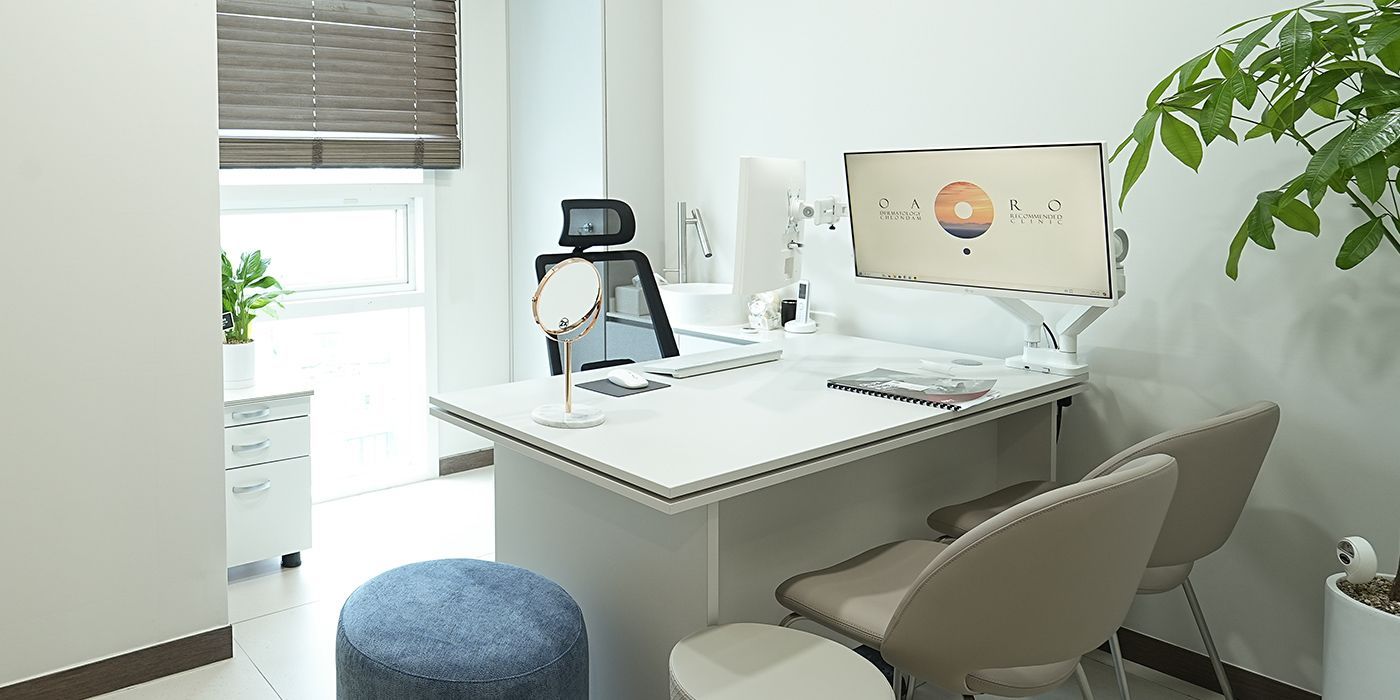
- Private 1:1 rooms in Cheongdam Tower, 8 minutes from Apgujeong Rodeo Station
- English-friendly coordination and clear, itemised pricing
Treatment goals
Common goals for post-inflammatory erythema
Fade red marks faster
Shorten the months-long natural fading to a few sessions.
Separate marks from active acne
Stop new PIE forming by bringing breakouts under control at the same time.
Even out cheek colour
Reduce the blotchy, flushed look that makes healed acne still visible.
Protect the skin barrier
Use vessel-targeted treatment instead of harsh exfoliants that prolong redness.
Your visit
What to expect
1. Consultation & diagnosis
Your dermatologist examines the marks under magnification, performs a blanching test to confirm they are vascular, grades any active acne and reviews your current skincare and medications.
2. Laser sessions
Each V laser or IPL session takes 15–30 minutes. Pulses feel like a brief warm snap with built-in cooling; numbing is rarely needed. The skin looks flushed for a few hours and occasionally shows faint bruising for a few days. Sessions are repeated every three to four weeks, usually three to five in total, with acne treatment running alongside.
3. Aftercare & follow-up
You receive written aftercare and a care notebook, and photographs are compared at each visit. Book a consultation to arrange an assessment.
Cost guide
Post-inflammatory erythema treatment cost in Seoul
Treatment is priced per session, with packages available for the usual course of three to five visits. Acne control, if needed, is quoted separately and may be partly covered by national insurance.
| Option | Typical range (KRW) |
|---|---|
| V laser (V-brite), cheeks or full face (per session) | 150,000 – 350,000 |
| Lumenis M22 IPL, full face (per session) | 150,000 – 300,000 |
| LDM or Rejuran add-on | 100,000 – 400,000 |
| PIE package (4 sessions) | 600,000 – 1,200,000 |
Exact pricing is confirmed at consultation after examination.
Aftercare
Aftercare
- Apply SPF 50+ every day; UV dilates vessels and slows fading.
- Use a gentle cleanser and moisturiser; pause acids, retinoids and scrubs for three days after each session.
- Avoid picking or squeezing any spot, as this is how most PIE begins.
- Skip saunas, alcohol and intense exercise for 24–48 hours to limit flushing.
- Continue any prescribed acne treatment so new marks do not form.
Medically reviewed by
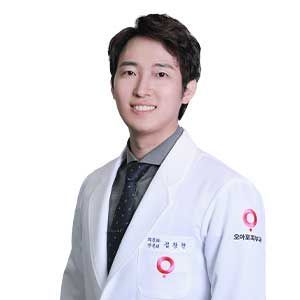
Dr. Chang-hyun Kim, M.D.
Board-certified dermatologist and Representative Director of Oaro Dermatology Clinic, Cheongdam. Ulthera Certified Treatment Provider, Thermage FLX Master Certified, and full member of the Korean Dermatological Association, the Korean Society for Dermatologic Laser and the Korean Filler Society.
FAQ
Frequently asked questions
What is the difference between PIE and PIH?
PIE is red and made of dilated vessels; PIH is brown and made of pigment. They need different treatments.
Does post-inflammatory erythema go away on its own?
Usually yes, over six to twelve months, but laser treatment can shorten this considerably.
Which laser is best for red acne marks?
Vascular lasers such as the V laser and IPL target haemoglobin, so they suit PIE far better than pigment-toning lasers.
Can I treat PIE while I still have acne?
Yes. Your dermatologist will treat active acne alongside so that new marks stop forming.
Will the V laser bruise my face?
Modern settings rarely bruise; if faint bruising occurs it fades within a few days.
Explore related care
Often considered together
- Skin Concerns — browse every concern we treat
- Redness Treatment — V laser and IPL for red skin
- Post-Inflammatory Hyperpigmentation — the brown counterpart
- Rejuran Healer — calming repair between sessions
- Broken Capillaries — visible vessels treated the same way
- Contact & Booking — book a consultation
Private 1:1 consultation
Plan your treatment with a board-certified dermatologist in Apgujeong
Tell us what you would like to change, and we will examine your skin, explain the options and give you a written plan with clear pricing. English-speaking coordinators are available for international patients.