
General Dermatology · Apgujeong, Seoul
Post-Inflammatory Hyperpigmentation
Fade the dark marks left by acne, eczema and injury with a plan that treats the cause first.

General Dermatology · Apgujeong, Seoul
Post-Inflammatory Hyperpigmentation
Fade the dark marks left by acne, eczema and injury with a plan that treats the cause first.

Quick answer
Medical dermatology at Oaro Dermatology Clinic is led by board-certified dermatologists who diagnose first and treat second. Korean National Health Insurance may apply to covered conditions for insured residents. Meet our doctors or book a same-week appointment .
At a glance
| Procedure time | Consultation 20 minutes; laser toning 15–20 minutes |
|---|---|
| Anaesthesia | Not usually required |
| Downtime | None; mild pinkness for a few hours |
| Sessions | Topicals 3–6 months; laser toning 3–6 sessions, 2–4 weeks apart |
| Results last | Marks that have faded do not return unless new inflammation occurs |
| Performed by | Board-certified dermatologist |
Overview
What is post-inflammatory hyperpigmentation?
When skin is inflamed, melanocytes respond by producing extra pigment. Once the inflammation settles, that pigment stays behind as a flat mark the same shape as the original lesion. Epidermal PIH sits in the upper skin and looks brown; dermal PIH, where pigment has dropped deeper, looks grey-blue and takes much longer to clear. PIH is more common and more persistent in medium to darker skin tones, including many East Asian skin types, and it follows acne most often, but eczema, insect bites, friction, burns, over-aggressive peels or lasers, and even shaving can trigger it. Sun exposure darkens it and prolongs it.
You should see a dermatologist when marks have not faded after three to six months, when the underlying acne or eczema is still active, when you are unsure whether a patch is PIH, melasma or something else, or when previous treatment has made the discoloration worse. Treating the pigment without controlling the inflammation rarely succeeds.
How PIH is treated at Oaro
At Oaro Dermatology Clinic in Apgujeong, Seoul, a board-certified dermatologist starts by confirming the diagnosis under Wood's lamp and dermoscopy, which also shows how deep the pigment sits, and by separating PIH from melasma and from the pink marks of post-inflammatory erythema, which need a different approach. The active cause, usually acne or dermatitis, is treated first. Pigment-regulating topicals such as azelaic acid, retinoids, tranexamic acid, vitamin C or a supervised short course of hydroquinone are prescribed alongside strict daily sunscreen. For slower marks, low-fluence toning with the Helios Pico 785 laser, mild chemical peels or Lumenis M22 IPL for mixed brown-and-red marks can speed clearance; energy settings are kept conservative because over-treatment can itself cause PIH. The clinic's full pigmentation treatment range is available once the skin is stable, and your plan is recorded in the care notebook.

Why patients choose Oaro
- Board-certified dermatologists for medical and cosmetic skin care under one roof
- Dermoscopy, allergy and scalp assessment before any prescription
- Written treatment plan, home-care guidance and follow-up
- Private rooms in Cheongdam Tower, 8 minutes from Apgujeong Rodeo Station
- English-friendly coordination for visitors and expats
Treatment goals
Common goals for PIH care
Stop new marks forming
Controlling acne or eczema removes the source of the pigment.
Fade existing marks
Topicals and gentle laser toning accelerate the skin's natural clearance of melanin.
Avoid making it worse
Conservative settings and sun protection protect pigment-prone skin from rebound darkening.
Even overall tone
Once marks fade, maintenance keeps the complexion uniform.
Your visit
What to expect
1. Consultation & diagnosis
Your dermatologist reviews the history of the marks and their cause, examines the skin with Wood's lamp and dermoscopy, and photographs the areas for comparison. Active inflammation is treated before pigment-specific therapy begins.
2. Treatment
A written topical routine is started, with sunscreen as its foundation. At Oaro Dermatology Clinic, pico laser toning or a mild peel may be added every two to four weeks for persistent marks, with a test area first for sensitive or darker skin.
3. Aftercare & follow-up
Progress is photographed every four to eight weeks. Most epidermal marks lighten over three to six months; dermal marks take longer and are managed with realistic expectations.
Cost & insurance
PIH treatment cost in Seoul
Diagnosis and treatment of the underlying acne or dermatitis may be covered by Korean National Health Insurance for insured residents, but pigment-fading treatments are considered cosmetic and are self-pay for everyone.
| Option | Typical range (KRW) |
|---|---|
| Specialist consultation (self-pay) | 30,000–60,000 |
| Prescription pigment topicals, per month | 50,000–120,000 |
| Pico laser toning, per session | 150,000–300,000 |
| Mild chemical peel, per session | 80,000–200,000 |
Exact pricing is confirmed at consultation after examination.
Home care
Aftercare
- Apply SPF 50 broad-spectrum sunscreen every morning and reapply at midday; this is the single most important step.
- Do not pick, squeeze or scrub spots or scabs, which restarts the inflammation that causes PIH.
- Introduce prescribed retinoids or acids gradually to avoid irritation, and stop and call the clinic if the skin stings or peels heavily.
- After laser toning, skip exfoliants and hot environments for 48 hours.
- Photograph your skin monthly in the same light to see gradual fading that is easy to miss day to day.
Medically reviewed by
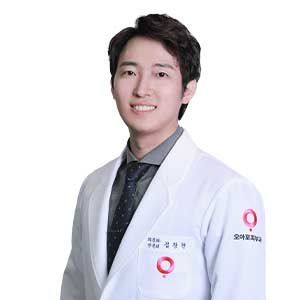
Dr. Chang-hyun Kim, M.D.
Board-certified dermatologist and Representative Director of Oaro Dermatology Clinic, Cheongdam. Full member of the Korean Dermatological Association, the Korean Society of Atopic Dermatitis, the Korean Society of Vitiligo & Pigmentation and the Korean Society of Acne & Rosacea.
FAQ
Frequently asked questions
Will PIH go away on its own?
Epidermal marks often fade within six to twelve months with sun protection; dermal marks can persist for years without treatment.
What is the difference between PIH and acne scars?
PIH is flat colour change; scars are changes in texture such as pits or raised areas, and they are treated differently.
Is laser safe for PIH on Asian skin?
Yes, when low-fluence pico toning is used conservatively by an experienced dermatologist; aggressive settings can worsen pigment.
Can I use hydroquinone long term?
No. It is used in supervised courses of a few months, then replaced by maintenance agents.
How soon after acne treatment can I start?
Topicals can start once the skin is calm; laser toning usually waits until active breakouts are controlled.
Explore related care
Related conditions and treatments
- Medical Dermatology — all medical skin conditions treated in Apgujeong
- Pigmentation Treatment — the full range of pigment options at Oaro
- Post-Inflammatory Erythema — the red marks that often accompany PIH
- Pico Laser — gentle toning for stubborn pigment
- Isotretinoin (Accutane) — controlling severe acne at the source
- Contact & Booking — book a pigmentation consultation
Same-week appointments
See a board-certified dermatologist in Apgujeong
Bring your questions, medication list and any photos of flare-ups. We will examine your skin, explain the diagnosis and give you a written plan. English-speaking coordinators are available for international patients and expats.