
Skin Boosters · Apgujeong, Seoul
Chemical Peels
Dermatologist-applied acid peels, from mild to medium depth, for acne, pigmentation, texture and dullness.
Skin Boosters · Apgujeong, Seoul
Chemical Peels
Dermatologist-applied acid peels, from mild to medium depth, for acne, pigmentation, texture and dullness.

Quick answer
Every plan at Oaro Dermatology Clinic begins with a 1:1 skin diagnosis by a board-certified dermatologist, so the dose, device settings and session count are set for your skin rather than a template. Meet our doctors or ask about your own skin .
At a glance
| Procedure time | 20–40 minutes |
|---|---|
| Anaesthesia | None; cooling fan for comfort |
| Downtime | None to 5 days of flaking depending on depth |
| Sessions | 3–6 sessions, 2–4 weeks apart |
| Results last | Several months with maintenance |
| Performed by | Board-certified dermatologist |
Overview
What are chemical peels?
A chemical peel uses an acid solution to loosen and remove damaged layers of skin in a controlled way, prompting the body to replace them with fresher, more evenly pigmented tissue. Peels are classified by depth. Superficial peels with glycolic, lactic, mandelic or salicylic acid act on the epidermis and have little or no downtime. Medium peels, typically TCA or layered combination formulas, reach the upper dermis and cause several days of peeling but give stronger results for pigmentation, sun damage and fine lines. Deep peels are rarely used in Korea because lasers now do that job with more precision.
In Seoul, peels are especially useful for acne and post-acne marks, pigmentation on darker or sun-exposed skin, keratosis pilaris on the arms and back, and the rough, dull texture that builds up with age. They remain one of the most cost-effective corrective treatments when applied by a dermatologist who understands skin type and depth.
How chemical peels work at Oaro
At Oaro Dermatology Clinic in Apgujeong, peels are a medical procedure performed by a board-certified dermatologist, not a spa service. Dr. Chang-hyun Kim and Dr. Ji-ho Park are members of the Korean Society of Acne & Rosacea and the Korean Society of Vitiligo & Pigmentation, which informs how acids are chosen for Asian skin that is prone to post-inflammatory darkening. The skin is prepared with a home routine for one to two weeks, then the acid is applied in layers while the doctor watches for the end point before neutralising. Peels are often combined with LED light therapy to calm the skin and with the Skin Boosters range once the surface has recovered.

Why patients choose Oaro
- Diagnosis and treatment by a board-certified dermatologist, not a technician
- Genuine devices and products: Ultherapy, Thermage FLX, Helios Pico, Rejuran, Juvelook
- One treatment plan, written down, with aftercare and follow-up
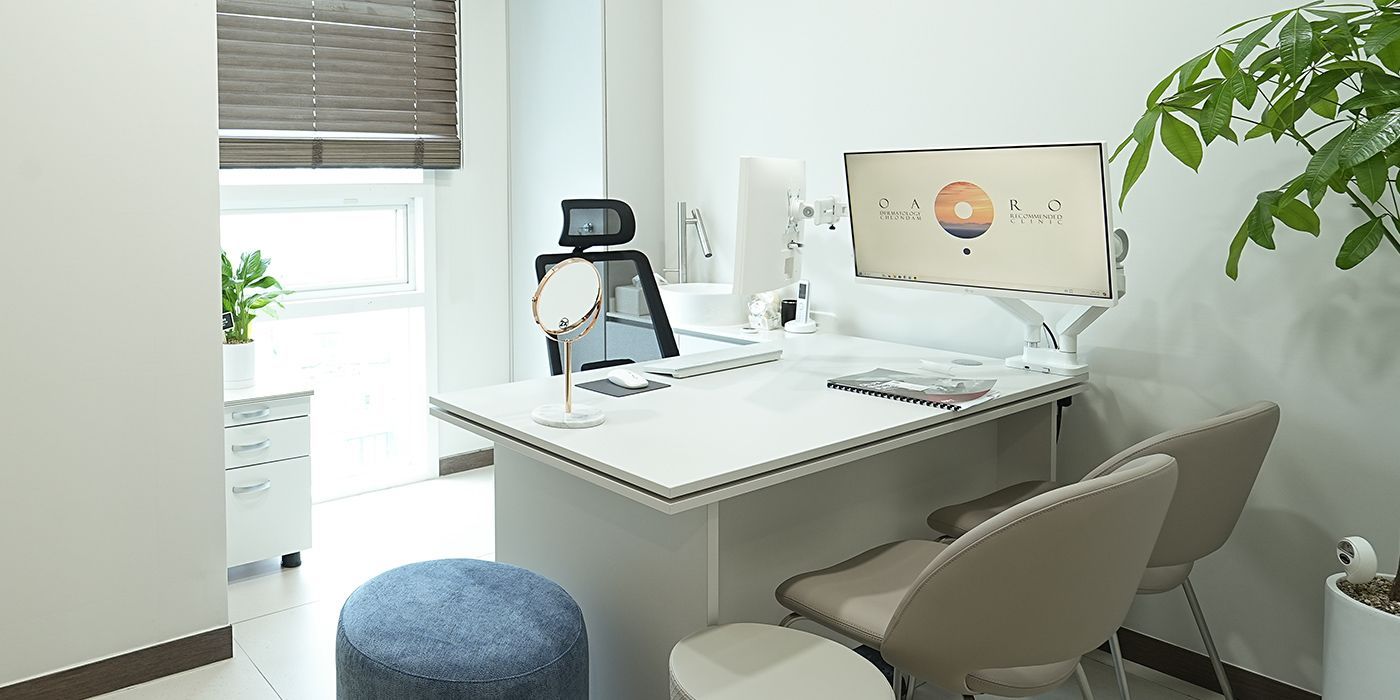
- Private 1:1 rooms in Cheongdam Tower, 8 minutes from Apgujeong Rodeo Station
- English-friendly coordination and clear, itemised pricing
Treatment goals
Common goals for chemical peels
Clearer acne and fewer marks
Salicylic and combination peels reduce comedones and the red or brown marks acne leaves behind.
Even pigmentation
Low-strength peels in a series help fade uneven skin tone and sun spots, often alongside laser toning.
Smoother texture and fine lines
Medium-depth peels refine rough skin and soften early lines around the mouth and eyes.
Body skin improvement
Peels treat keratosis pilaris, back acne and rough elbows and knees. Discuss your goal on our booking page.
Your visit
What to expect
1. Consultation & diagnosis
Your dermatologist assesses skin type, pigmentation risk, acne activity and history of cold sores or isotretinoin use, then prescribes a pre-peel routine and the acid, strength and number of sessions.
2. Peel application
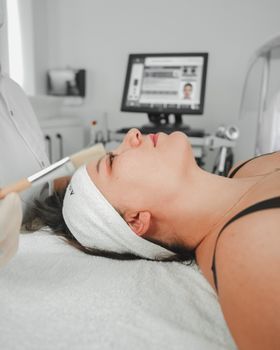
The skin is degreased, then the acid is applied in layers with a brush or gauze. A cooling fan reduces the tingling. The doctor monitors frosting or erythema to reach the right end point before neutralising and applying a soothing mask.
3. Aftercare & follow-up
Written aftercare covers moisturising and sun protection. Flaking, if any, peaks on days two to four. Sessions are repeated every two to four weeks and photographs track the series.
Cost guide
Chemical peel cost in Seoul
Price depends on the acid, depth and area. Typical 2026 ranges in Apgujeong dermatology clinics are shown below.
| Option | Typical range (KRW) |
|---|---|
| Superficial peel (face, single) | 80,000–150,000 |
| Medium-depth or combination peel (face) | 150,000–300,000 |
| Body peel (back or arms) | 150,000–350,000 |
| Series of 4 superficial peels | 300,000–550,000 |
Exact pricing is confirmed at consultation after examination.
Aftercare
Aftercare
- Apply sunscreen SPF 50 every morning and avoid direct sun for two weeks; pigmentation risk is highest while the skin is healing.
- Use only the gentle cleanser and moisturiser recommended; no acids, retinoids or scrubs until flaking has finished.
- Do not pick or peel flaking skin.
- Skip saunas, swimming and heavy exercise for 48 hours.
- Contact the clinic if you see blistering, unusual swelling or signs of cold sores.
Medically reviewed by
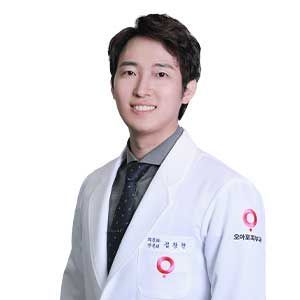
Dr. Chang-hyun Kim, M.D.
Board-certified dermatologist and Representative Director of Oaro Dermatology Clinic, Cheongdam. Ulthera Certified Treatment Provider, Thermage FLX Master Certified, and full member of the Korean Dermatological Association, the Korean Society for Dermatologic Laser and the Korean Filler Society.
FAQ
Frequently asked questions
Will my face visibly peel?
Superficial peels usually cause only mild flaking; medium peels cause noticeable peeling for three to five days.
Are chemical peels safe for Asian or darker skin?
Yes when depth and acid are chosen carefully; your dermatologist uses pre-treatment and conservative strengths to reduce the risk of post-inflammatory hyperpigmentation.
How many peels do I need?
Three to six sessions spaced two to four weeks apart is typical, followed by maintenance every few months.
Can I have a peel while on isotretinoin?
Medium peels are postponed for six months after stopping isotretinoin; mild peels may be considered case by case.
Peel or laser: which is better for pigmentation?
They are often combined. Peels work on the surface and are affordable; lasers target deeper pigment with more precision.
Explore related care
Often considered together
- Skin Boosters — the full range at Oaro
- Skin Exfoliation — gentler maintenance option
- Pigmentation Treatment — laser and peel combinations
- Pico Laser — for pigment that peels cannot reach
- Isotretinoin (Accutane) — medical acne care that affects peel timing
- Contact & Booking — book a consultation in Apgujeong
Private 1:1 consultation
Plan your treatment with a board-certified dermatologist in Apgujeong
Tell us what you would like to change, and we will examine your skin, explain the options and give you a written plan with clear pricing. English-speaking coordinators are available for international patients.