
General Dermatology · Apgujeong, Seoul
Epidermoid Cyst
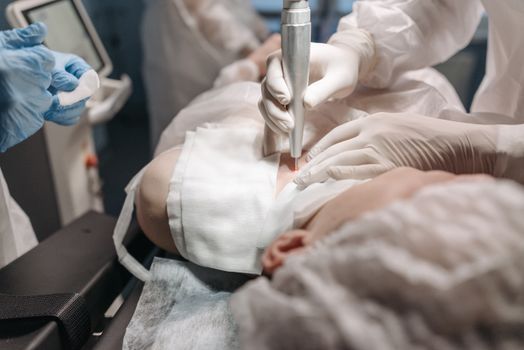
Complete removal of epidermoid cysts under local anaesthesia, with care taken to minimise scarring.
General Dermatology · Apgujeong, Seoul
Epidermoid Cyst
Complete removal of epidermoid cysts under local anaesthesia, with care taken to minimise scarring.

Quick answer
Medical dermatology at Oaro Dermatology Clinic is led by board-certified dermatologists who diagnose first and treat second. Korean National Health Insurance may apply to covered conditions for insured residents. Meet our doctors or book a same-week appointment .
At a glance
| Procedure time | 20–40 minutes |
|---|---|
| Anaesthesia | Local injection |
| Downtime | Sutures for 5–14 days depending on the site; light activity from the next day |
| Sessions | 1; an inflamed cyst may need a settling visit first |
| Results last | Complete removal of the sac rarely recurs |
| Performed by | Board-certified dermatologist |
Overview
What is an epidermoid cyst?
Epidermoid cysts, often loosely called sebaceous cysts, are the most common cysts of the skin. They form when the opening of a hair follicle becomes blocked and the lining continues to shed keratin into a closed sac, which slowly enlarges over months or years. A typical cyst is a firm, mobile, skin-coloured dome from a few millimetres to several centimetres across, sometimes with a tiny central pore. On the scalp a similar lesion is called a pilar cyst. Cysts are benign, but if the wall ruptures the keratin leaks into surrounding tissue and causes sudden redness, pain and swelling, and bacteria can turn an inflamed cyst into an abscess.
You should see a dermatologist if a lump is growing, becomes red or painful, discharges foul-smelling material, keeps refilling after draining, or sits somewhere visible such as the face. Squeezing a cyst at home usually leaves the sac behind, so it returns, and it raises the risk of infection and scarring.
How epidermoid cysts are treated at Oaro
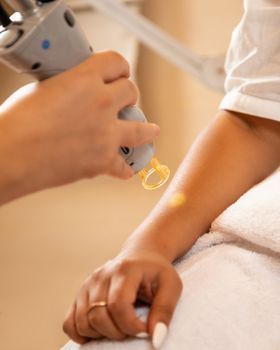
At Oaro Dermatology Clinic in Apgujeong, Seoul, a board-certified dermatologist confirms the diagnosis by examination and, for deeper or unusual lumps, distinguishes a cyst from a lipoma or other growth. An inflamed cyst is first calmed with an intralesional corticosteroid injection, a short course of antibiotics or incision and drainage if an abscess has formed; definitive removal waits until the inflammation has settled, because operating on inflamed tissue scars more and recurs more often. A quiet cyst is removed under local anaesthetic through a small elliptical or minimal-punch incision, with the entire sac lifted out intact. Small facial cysts can be removed through a CO2-laser-assisted punch opening to keep the scar tiny. Tissue is sent for histology when appropriate. Sutures are placed with attention to skin tension lines, and the clinic's scar treatment options are available if you are prone to thick scars. Recurrent infection is managed as a bacterial skin infection alongside planning removal.
Why patients choose Oaro
- Board-certified dermatologists for medical and cosmetic skin care under one roof
- Dermoscopy, allergy and scalp assessment before any prescription
- Written treatment plan, home-care guidance and follow-up
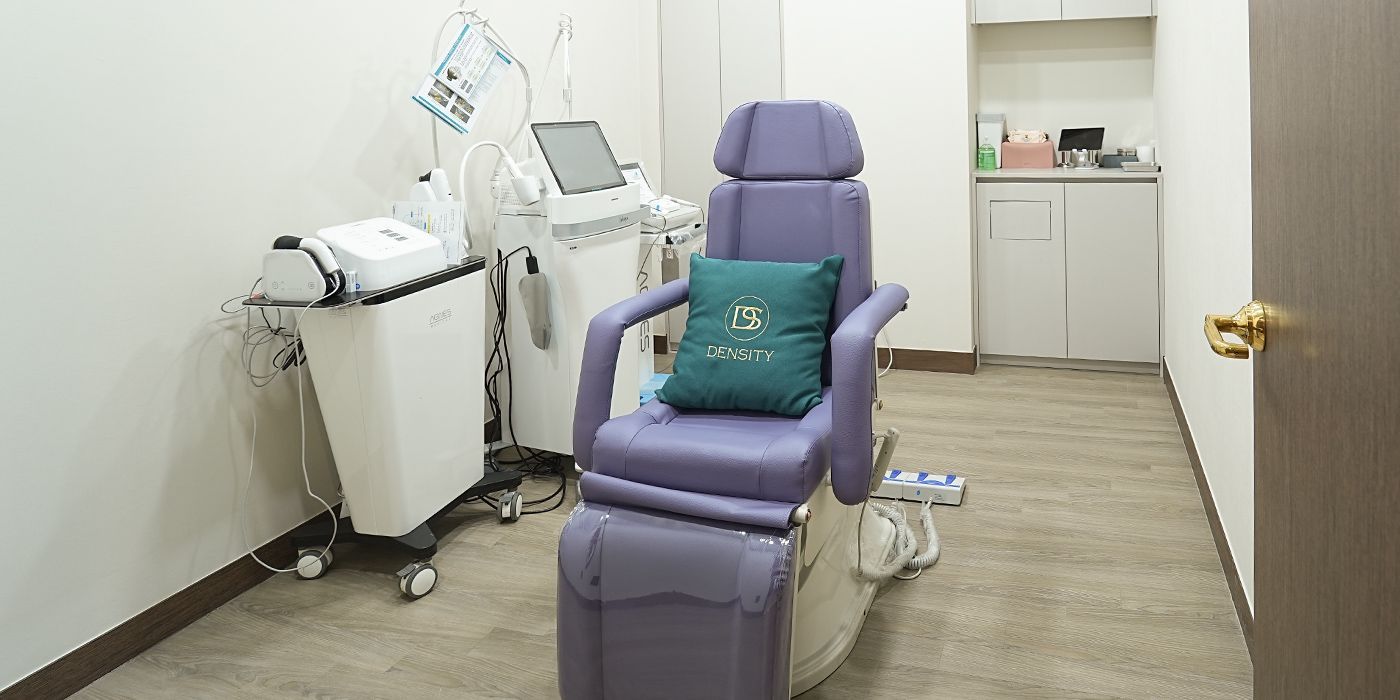
- Private rooms in Cheongdam Tower, 8 minutes from Apgujeong Rodeo Station
- English-friendly coordination for visitors and expats
Treatment goals
Common goals for epidermoid cyst care
Remove the sac completely
Taking out the whole lining is what prevents the cyst from refilling.
Settle inflammation safely
Steroid injection, antibiotics or drainage relieve pain and allow a cleaner operation later.
Minimise the scar
Small incisions aligned with skin lines, fine sutures and laser-assisted techniques keep marks discreet, especially on the face.
Confirm the diagnosis
Histology, when indicated, ensures the lump was what it appeared to be.
Your visit
What to expect
1. Consultation & diagnosis
Your dermatologist examines the lump, checks for inflammation and discusses timing. If the cyst is red or painful, a settling treatment is given and removal is scheduled for a few weeks later.
2. Treatment
The area is cleaned and numbed with a local injection. At Oaro Dermatology Clinic the dermatologist makes a small incision, removes the cyst with its sac intact, cleans the cavity and closes the skin with fine sutures. The procedure takes 20–40 minutes and you walk out with a dressing.
3. Aftercare & follow-up
Sutures are removed after five to seven days on the face and ten to fourteen days on the body. Histology results, if sent, are discussed at that visit, and scar care advice is written in your care notebook.
Cost & insurance
Epidermoid cyst removal cost in Seoul
Removal of a symptomatic, inflamed or enlarging cyst is medical treatment and may be covered by Korean National Health Insurance for insured residents. Visitors and purely cosmetic removals are self-pay; itemised receipts are provided for travel insurers.
| Option | Typical range (KRW) |
|---|---|
| Consultation (self-pay) | 30,000–60,000 |
| Intralesional steroid or incision and drainage | 50,000–150,000 |
| Excision of a small cyst with sutures | 150,000–300,000 |
| Excision of a large or facial cyst, with histology | 300,000–500,000 |
Exact pricing is confirmed at consultation after examination.
Home care
Aftercare
- Keep the dressing dry for 24 hours, then clean gently and reapply the prescribed ointment daily.
- Avoid stretching the area, heavy lifting and sports until sutures are removed.
- Do not soak in baths, pools or saunas until the wound has fully closed.
- After suture removal, use silicone gel or tape and sunscreen on the scar for two to three months.
- Contact the clinic promptly if the wound becomes increasingly red, hot, painful or leaks fluid.
Medically reviewed by
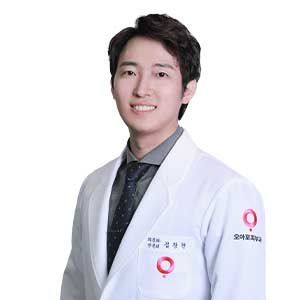
Dr. Chang-hyun Kim, M.D.
Board-certified dermatologist and Representative Director of Oaro Dermatology Clinic, Cheongdam. Full member of the Korean Dermatological Association, the Korean Society of Atopic Dermatitis, the Korean Society of Vitiligo & Pigmentation and the Korean Society of Acne & Rosacea.
FAQ
Frequently asked questions
Can an epidermoid cyst go away on its own?
Rarely. Cysts may shrink after inflammation but usually persist or regrow because the sac remains.
Should I squeeze it?
No. Squeezing leaves the lining behind, invites infection and makes later removal harder.
Will removal leave a scar?
A small linear scar is expected; careful technique and scar care usually make it faint within months.
Can a cyst be removed while it is infected?
It is usually drained or calmed first and removed completely a few weeks later for a better result.
Is cyst removal possible for visitors to Seoul?
Yes, if you can stay for suture removal or arrange it at home; Oaro provides written instructions for your doctor.
Explore related care
Related conditions and treatments
- Medical Dermatology — all medical skin conditions treated in Apgujeong
- Lipoma — the other common lump beneath the skin
- Bacterial Skin Infection — treating an infected cyst or abscess
- Keloid Scar Treatment — care for scars that thicken
- Skin Check-Up — assessment of all lumps and growths
- Contact & Booking — book a cyst consultation in Seoul
Same-week appointments
See a board-certified dermatologist in Apgujeong
Bring your questions, medication list and any photos of flare-ups. We will examine your skin, explain the diagnosis and give you a written plan. English-speaking coordinators are available for international patients and expats.