
Allergy & Sensitivity · Apgujeong, Seoul
Contact Dermatitis
Pinpoint the irritant or allergen behind your rash and restore calm, resilient skin.
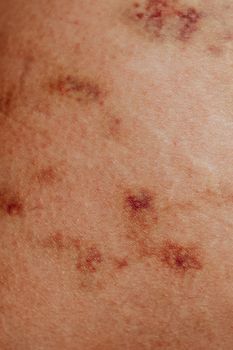
Allergy & Sensitivity · Apgujeong, Seoul
Contact Dermatitis
Pinpoint the irritant or allergen behind your rash and restore calm, resilient skin.

Quick answer
Medical dermatology at Oaro Dermatology Clinic is led by board-certified dermatologists who diagnose first and treat second. Korean National Health Insurance may apply to covered conditions for insured residents. Meet our doctors or book a same-week appointment .
At a glance
| Procedure time | Consultation 20–30 minutes |
|---|---|
| Anaesthesia | Not required |
| Downtime | None |
| Sessions | 1–2 visits for diagnosis; patch testing adds two reading visits |
| Results last | Rash typically clears in 2–4 weeks once the cause is removed |
| Performed by | Board-certified dermatologist |
Overview
What is contact dermatitis?
Contact dermatitis is inflammation of the skin triggered by direct contact with an external substance. Around four in five cases are irritant contact dermatitis, in which repeated exposure to water, soap, hand sanitiser, solvents or friction strips the barrier until the skin becomes red, dry and sore. The remainder are allergic contact dermatitis, a delayed immune reaction to a specific substance such as nickel, chromate, rubber accelerators, fragrance, preservatives like methylisothiazolinone, or hair dye. Allergic reactions usually appear one to three days after exposure and can spread slightly beyond the contact area.
The distribution is the main clue: eyelids suggest nail varnish or airborne allergens, the earlobes or wrist suggest metal, the hands suggest occupational exposure, and sharp-edged patches suggest something applied or worn. You should see a dermatologist when a rash lasts more than two weeks, blisters, affects the face or genital area, keeps returning in the same place, or interferes with your work.
How contact dermatitis is treated at Oaro
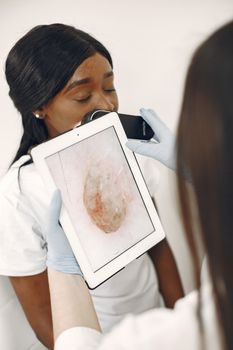
At Oaro Dermatology Clinic in Apgujeong, Seoul, a board-certified dermatologist takes a detailed exposure history covering skincare, work, hobbies and jewellery, then examines the pattern. Dermoscopy and a quick fungal scraping may be used to rule out a fungal infection, which can mimic eczema. If an allergen is suspected, patch testing with a standard Korean or international series identifies it. Treatment combines removal of the trigger, barrier-repair emollients and a short course of appropriately potent topical corticosteroid or a calcineurin inhibitor for delicate sites. Chronic cases, particularly hand eczema, may need longer plans. Everything is recorded in your care notebook so that you know exactly what to avoid and what to apply.
Why patients choose Oaro
- Board-certified dermatologists for medical and cosmetic skin care under one roof
- Dermoscopy, allergy and scalp assessment before any prescription
- Written treatment plan, home-care guidance and follow-up
- Private rooms in Cheongdam Tower, 8 minutes from Apgujeong Rodeo Station
- English-friendly coordination for visitors and expats
Treatment goals
Common goals for contact dermatitis care
Find the cause
Matching the rash pattern to an exposure, with patch testing when needed, is the step that prevents recurrence.
Clear the rash
Anti-inflammatory therapy settles redness, itch and cracking, usually within two to four weeks.
Rebuild tolerance
A barrier routine lets the skin recover so that minor exposures no longer trigger a flare.
Protect your work and routine
Practical substitutions, glove advice and label-reading guidance keep daily life manageable.
Your visit
What to expect
1. Consultation & diagnosis
Your dermatologist reviews products, occupation and timing, examines the rash and may use dermoscopy. If an allergic cause is likely, patch tests are applied to the back and read over the following week.
2. Treatment
You receive a written plan: which trigger to remove, which emollient and cleanser to use, and a topical anti-inflammatory matched to the body site. Severe or widespread reactions may be treated with a short oral course. At Oaro Dermatology Clinic, every prescription comes with clear instructions on frequency and duration.
3. Aftercare & follow-up
A review after two to four weeks checks that the skin has cleared; patch-test results are explained with a printed list of safe and unsafe ingredients.
Cost & insurance
Contact dermatitis treatment cost in Seoul
Contact dermatitis is a medical condition, and Korean National Health Insurance typically covers consultation, prescription and medically indicated patch testing for insured residents. Visitors pay self-pay rates and receive itemised receipts.
| Option | Typical range (KRW) |
|---|---|
| Specialist consultation (self-pay) | 30,000–60,000 |
| Consultation + prescription topicals | 60,000–150,000 |
| Patch test series | 150,000–300,000 |
| Fungal scraping (KOH test) | 10,000–30,000 |
Exact pricing is confirmed at consultation after examination.
Home care
Aftercare
- Remove the suspected trigger completely; partial avoidance usually keeps the rash going.
- Wear cotton-lined gloves for wet work and nitrile rather than latex if rubber allergy is suspected.
- Apply emollient generously after every hand wash and before bed.
- Use the prescribed topical for the full written course even once the skin looks better.
- Check ingredient lists on new cosmetics against your avoidance list before use.

Medically reviewed by
Dr. Chang-hyun Kim, M.D.
Board-certified dermatologist and Representative Director of Oaro Dermatology Clinic, Cheongdam. Full member of the Korean Dermatological Association, the Korean Society of Atopic Dermatitis, the Korean Society of Vitiligo & Pigmentation and the Korean Society of Acne & Rosacea.
FAQ
Frequently asked questions
What is the difference between irritant and allergic contact dermatitis?
Irritant dermatitis is direct damage from a harsh substance and can affect anyone; allergic dermatitis is an immune reaction in sensitised people and can follow very small exposures.
Do I need patch testing?
Only when an allergic cause is suspected or the rash keeps returning despite good care; your dermatologist will advise.
How long until it clears?
Most cases improve within two to four weeks of removing the cause and treating the inflammation; chronic hand cases take longer.
Can contact dermatitis come back?
Yes, if the trigger is contacted again. Knowing the exact allergen makes avoidance straightforward.
Can I be tested for Korean skincare ingredients?
Standard patch series cover common fragrances and preservatives found in Korean and international products, and your own products can sometimes be tested as well.
Explore related care
Related conditions and treatments
- Medical Dermatology — the hub for skin conditions treated in Apgujeong
- Allergy Testing — patch testing to confirm an allergen
- Hand Eczema — chronic dermatitis of the hands
- Skin Allergy — immediate and delayed allergic reactions
- Atopic Dermatitis — when a constitutional eczema tendency is involved
- Contact & Booking — book a dermatology consultation
Same-week appointments
See a board-certified dermatologist in Apgujeong
Bring your questions, medication list and any photos of flare-ups. We will examine your skin, explain the diagnosis and give you a written plan. English-speaking coordinators are available for international patients and expats.