
Skin Concerns · Apgujeong, Seoul
Thickened Skin
Leathery, coarse or rubbery skin has a cause; find it, then thin and soften the surface safely.
Skin Concerns · Apgujeong, Seoul
Thickened Skin
Leathery, coarse or rubbery skin has a cause; find it, then thin and soften the surface safely.
Quick answer
Every plan at Oaro Dermatology Clinic begins with a 1:1 skin diagnosis by a board-certified dermatologist, so the dose, device settings and session count are set for your skin rather than a template. Meet our doctors or ask about your own skin .
At a glance
| Procedure time | 20–45 minutes |
|---|---|
| Anaesthesia | Topical cream; local anaesthetic for RF or ablative laser |
| Downtime | 2–7 days for resurfacing; none for prescription care |
| Sessions | 1–4 depending on cause |
| Results last | Long-lasting once the cause is controlled |
| Performed by | Board-certified dermatologist |
Overview
What is thickened skin?
Thickened skin is a visible or palpable increase in the depth and firmness of the skin, giving a coarse, leathery, waxy or rubbery feel. It is a response, not a disease in itself, and the response has several triggers. Long-term ultraviolet exposure causes the epidermis to thicken and the dermis to accumulate disorganised elastic tissue, a pattern called solar elastosis that is common on the neck, forehead and backs of the hands. Repeated rubbing or scratching produces lichenification, a localised leathery plaque typical of chronic eczema or lichen simplex. Hormonal and sebaceous changes can enlarge the oil glands of the nose, producing the bulbous thickening of rhinophyma, which is linked to rosacea. Smoking and occupational friction add to the picture.
Because the causes differ so much, thickened skin on the nose, the neck and the elbow are treated quite differently. Treating the surface without addressing the trigger usually leads to recurrence.
How thickened skin is treated at Oaro
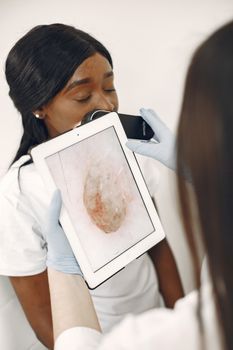
At Oaro Dermatology Clinic in Apgujeong, Seoul, Dr. Chang-hyun Kim examines the affected area and, where needed, uses dermoscopy or a small biopsy to confirm the diagnosis. Chronic eczema or lichen simplex is calmed first with prescription anti-inflammatory care, as described on our eczema page. Sun-thickened skin is resurfaced with fractional CO2 or Erbium laser and supported with collagen stimulators. Sebaceous thickening of the nose responds to Agnes RF and CO2 reshaping, usually alongside rosacea treatment. Each case is photographed and planned in your care notebook.

Why patients choose Oaro
- Diagnosis and treatment by a board-certified dermatologist, not a technician
- Genuine devices and products: Ultherapy, Thermage FLX, Helios Pico, Rejuran, Juvelook
- One treatment plan, written down, with aftercare and follow-up
- Private 1:1 rooms in Cheongdam Tower, 8 minutes from Apgujeong Rodeo Station
- English-friendly coordination and clear, itemised pricing
Treatment goals
Common goals for thickened skin treatment
A softer, thinner surface
Reduce the leathery feel so the area moves and looks like the surrounding skin.
Control of the trigger
Settle the eczema, rosacea or sun damage that caused the thickening so it does not rebuild.
A smoother nose contour
In rhinophyma, restore the original shape of the nose with minimal visible scarring.
Even colour and texture
Blend the treated area into surrounding skin in tone as well as thickness.
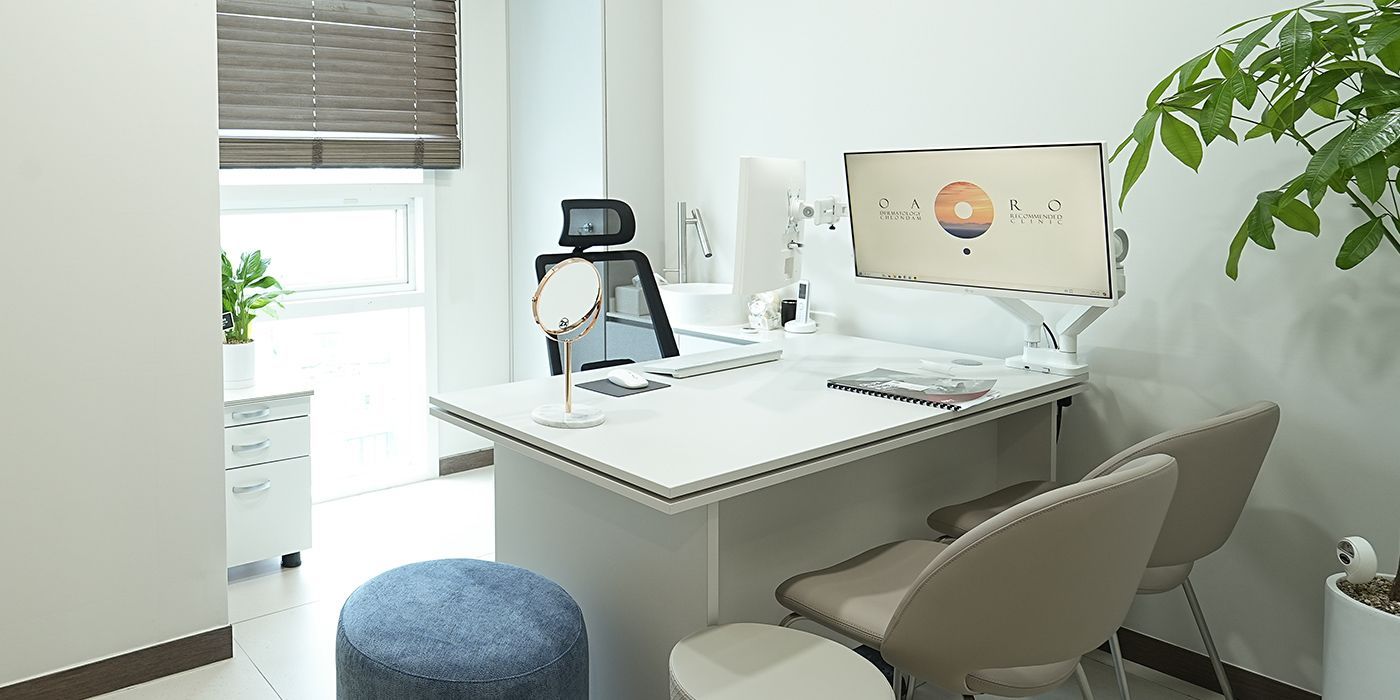
Your visit
What to expect
1. Consultation & diagnosis
Your dermatologist takes a history of sun exposure, scratching habits and skin conditions, examines the area closely and may perform dermoscopy or a biopsy. You receive a written diagnosis and a staged plan.
2. Treatment
Inflammatory causes are treated with prescription creams or injections for several weeks before any resurfacing. Laser sessions take 20–40 minutes under numbing or local anaesthetic; nasal reshaping with Agnes RF and CO2 may need two or three visits a month apart. Sun-thickened skin on the neck or hands is usually treated in two to four lighter sessions.
3. Aftercare & follow-up
Healing after ablative treatment takes about a week with written wound-care instructions in English. Reviews at one week and six weeks check healing and plan maintenance.
Cost guide
Thickened skin treatment cost in Seoul
Costs in Apgujeong depend on the cause. Medical conditions may be partly covered by Korean national health insurance for eligible patients; cosmetic resurfacing is not.
| Option | Typical range (KRW) |
|---|---|
| Consultation and prescription care for eczema or lichenification | 30,000 – 100,000 per visit |
| Fractional CO2 or Erbium laser, per area | 300,000 – 900,000 |
| Agnes RF for nasal sebaceous thickening, per session | 400,000 – 800,000 |
| Collagen stimulator for sun-thickened skin, per session | 400,000 – 1,000,000 |
Exact pricing is confirmed at consultation after examination.
Aftercare
Aftercare
- Follow the wound-care routine exactly after ablative laser; keep the area moist, not dry.
- Stop scratching or rubbing; cover the area at night if needed.
- Use SPF 50 and physical shade on treated skin for at least a month.
- Continue prescribed anti-inflammatory care even after the skin looks normal.
- Report oozing, spreading redness or pain promptly.
Medically reviewed by
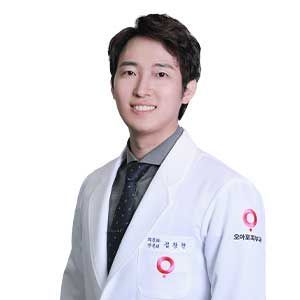
Dr. Chang-hyun Kim, M.D.
Board-certified dermatologist and Representative Director of Oaro Dermatology Clinic, Cheongdam. Ulthera Certified Treatment Provider, Thermage FLX Master Certified, and full member of the Korean Dermatological Association, the Korean Society for Dermatologic Laser and the Korean Filler Society.
FAQ
Frequently asked questions
What causes thickened skin?
Most often sun damage, chronic scratching or rubbing, long-standing eczema, or enlarged oil glands on the nose.
Can thickened skin be reversed?
Usually it can be softened considerably once the trigger is controlled; very old solar elastosis improves but may not fully normalise.
Is a biopsy necessary?
Not always, but it is recommended when the diagnosis is unclear or a growth needs to be excluded.
Will laser leave scars on my nose?
Fractional and RF methods are chosen to minimise scarring; healing takes about a week and redness fades over weeks.
Does insurance cover treatment?
Medical causes such as eczema may be covered for eligible patients; cosmetic resurfacing is self-pay.
Explore related care
Often considered together
- CO2 Laser Resurfacing — ablative smoothing of thickened skin
- Rosacea Treatment — the condition behind nasal thickening
- Eczema — chronic eczema that causes lichenification
- Sun Damage — solar elastosis and its treatment
- Skin Concerns — every concern we treat
- Contact & Booking — book a diagnosis in Apgujeong
Private 1:1 consultation
Plan your treatment with a board-certified dermatologist in Apgujeong
Tell us what you would like to change, and we will examine your skin, explain the options and give you a written plan with clear pricing. English-speaking coordinators are available for international patients.