
Skin Concerns · Apgujeong, Seoul
Rough Skin Texture
Smooth bumpy, uneven skin with resurfacing lasers, skin boosters and a repair routine built for your skin type.

Skin Concerns · Apgujeong, Seoul
Rough Skin Texture
Smooth bumpy, uneven skin with resurfacing lasers, skin boosters and a repair routine built for your skin type.

Quick answer
Every plan at Oaro Dermatology Clinic begins with a 1:1 skin diagnosis by a board-certified dermatologist, so the dose, device settings and session count are set for your skin rather than a template. Meet our doctors or ask about your own skin .
At a glance
| Procedure time | 30–60 minutes |
|---|---|
| Anaesthesia | Topical numbing cream |
| Downtime | 0–5 days depending on laser depth |
| Sessions | 3–5, every 3–4 weeks |
| Results last | 6–12 months; longer with home care |
| Performed by | Board-certified dermatologist |
Overview
What is rough skin texture?
Rough skin texture is what you feel when you run a finger across the cheek and it is not smooth: small bumps, dry flakes, coarse patches, or a surface that looks uneven under makeup. It is not one condition but a sign that something in the skin's renewal cycle has slowed or been disrupted. Common causes include a build-up of dead cells from sluggish turnover, dehydration that leaves the outer layer stiff and flaky, sun damage that thickens and disorganises the epidermis, residual acne or closed comedones, enlarged pores, and shallow scarring from past breakouts. Less often, conditions such as keratosis pilaris, seborrheic dermatitis or a reaction to a skincare product are responsible.
Texture tends to worsen through the thirties and forties as collagen declines and cell turnover slows from roughly 28 days to 40 or more. Smoking, harsh cleansers and over-exfoliation can make it worse at any age.
How rough texture is treated at Oaro
At Oaro Dermatology Clinic in Apgujeong, Seoul, the first step is to work out why your skin is rough. Dr. Chang-hyun Kim examines the surface under magnification and uses skin analysis imaging to separate dryness, congestion, pore enlargement and scarring. If the barrier is damaged, repair comes first with hydration and LDM ultrasound. Congested skin is cleared with professional exfoliation or a mild peel. Texture from sun damage or shallow scars is resurfaced with Helios Pico laser or Erbium Fraxel, and the dermis is rebuilt with Rejuran Healer or Juvelook. Each step is recorded in your care notebook.

Why patients choose Oaro
- Diagnosis and treatment by a board-certified dermatologist, not a technician
- Genuine devices and products: Ultherapy, Thermage FLX, Helios Pico, Rejuran, Juvelook
- One treatment plan, written down, with aftercare and follow-up
- Private 1:1 rooms in Cheongdam Tower, 8 minutes from Apgujeong Rodeo Station
- English-friendly coordination and clear, itemised pricing
Treatment goals
Common goals for rough texture treatment
A smooth surface to the touch
Remove the build-up of dead cells and flakes so the skin feels even across the cheeks and forehead.
Makeup that sits evenly
Refine pores and small bumps so foundation no longer catches or looks patchy.
Even light reflection
Flatten micro-irregularities so the skin looks luminous rather than dull or grainy.
A barrier that holds moisture
Restore the outer layer so improvements last between visits.
Your visit
What to expect
1. Consultation & diagnosis
Your dermatologist reviews your routine, examines the skin and uses analysis imaging to identify the main cause. You receive a written plan that sequences repair, resurfacing and rebuilding.
2. Treatment
Most courses begin with Aquapeel or a gentle peel. From the second session, Pico laser or Erbium Fraxel is applied under numbing cream for about 20–30 minutes, often followed by Rejuran or Juvelook injections in the same visit. Sessions run every three to four weeks for three to five rounds.
3. Aftercare & follow-up
You go home with written aftercare in English and a simple home routine. Texture is re-measured at each visit, and settings are adjusted based on your response.
Cost guide
Rough skin texture treatment cost in Seoul
Texture programs in Apgujeong are priced per session, with package options for a course.
| Option | Typical range (KRW) |
|---|---|
| Aquapeel or mild peel, per session | 80,000 – 200,000 |
| Pico laser resurfacing, per session | 200,000 – 500,000 |
| Erbium Fraxel, per session | 400,000 – 900,000 |
| Rejuran Healer or Juvelook, per session | 300,000 – 600,000 |
Exact pricing is confirmed at consultation after examination.
Aftercare
Aftercare
- Cleanse gently with lukewarm water; avoid scrubs, acids and retinoids for five days after laser.
- Apply a bland moisturiser several times a day while the skin feels tight.
- Use SPF 50 every morning and reapply outdoors; new skin pigments easily.
- Do not peel flakes; let them shed naturally.
- Avoid saunas, swimming pools and heavy exercise for 48 hours.
Medically reviewed by
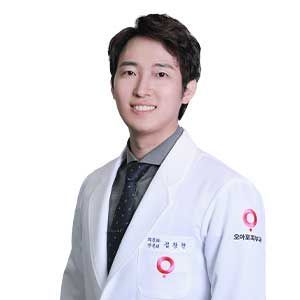
Dr. Chang-hyun Kim, M.D.
Board-certified dermatologist and Representative Director of Oaro Dermatology Clinic, Cheongdam. Ulthera Certified Treatment Provider, Thermage FLX Master Certified, and full member of the Korean Dermatological Association, the Korean Society for Dermatologic Laser and the Korean Filler Society.
FAQ
Frequently asked questions
Why is my skin texture rough?
Usually a mix of slow cell turnover, dehydration, sun damage and congestion; a dermatologist can identify which is dominant for you.
Which laser is best for uneven skin texture?
Pico laser suits mild texture with little downtime; Erbium Fraxel suits deeper roughness and shallow scars.
How many sessions does it take?
Most patients see improvement after one and a settled result after three to five.
Can rough texture come back?
Yes, if the underlying causes return. A simple home routine and occasional maintenance keep the skin smooth.
Is treatment safe for Asian skin?
Yes, when settings are adjusted for pigment risk; Oaro uses conservative parameters and staged sessions.
Explore related care
Often considered together
- Pico Laser — low-downtime resurfacing
- Rejuran Healer — rebuilding the dermis beneath the surface
- Skin Exfoliation — clearing the dead-cell build-up
- Enlarged Pores — when pores are the main texture issue
- Dull Skin — the related loss of radiance
- Skin Concerns — all concerns
- Contact & Booking — book a texture consultation in Seoul
Private 1:1 consultation
Plan your treatment with a board-certified dermatologist in Apgujeong
Tell us what you would like to change, and we will examine your skin, explain the options and give you a written plan with clear pricing. English-speaking coordinators are available for international patients.