
Botox · Apgujeong, Seoul
Teeth Grinding Botox in Apgujeong & Cheongdam, Gangnam, Seoul
Reduces the force of jaw clenching and night-time grinding by relaxing the chewing muscles, alongside care from your dentist.
Quick answer
Every Botox plan at Oaro Dermatology Clinic begins with a 1:1 examination by a board-certified dermatologist, so the toxin, dose and injection points are set for your muscles rather than a template. Meet our doctors or see all injectables.
At a glance
| Procedure time | 10–15 minutes |
|---|---|
| Anaesthesia | Usually none; ice or numbing cream on request |
| Results start | Clenching force eases in about 1–2 weeks |
| Results last | About 4–6 months |
| Downtime | Minimal; chewing may feel tired for a few weeks |
| Sessions | One, repeated every 4–6 months if helpful |
| Performed by | Board-certified dermatologist |
Visual guide
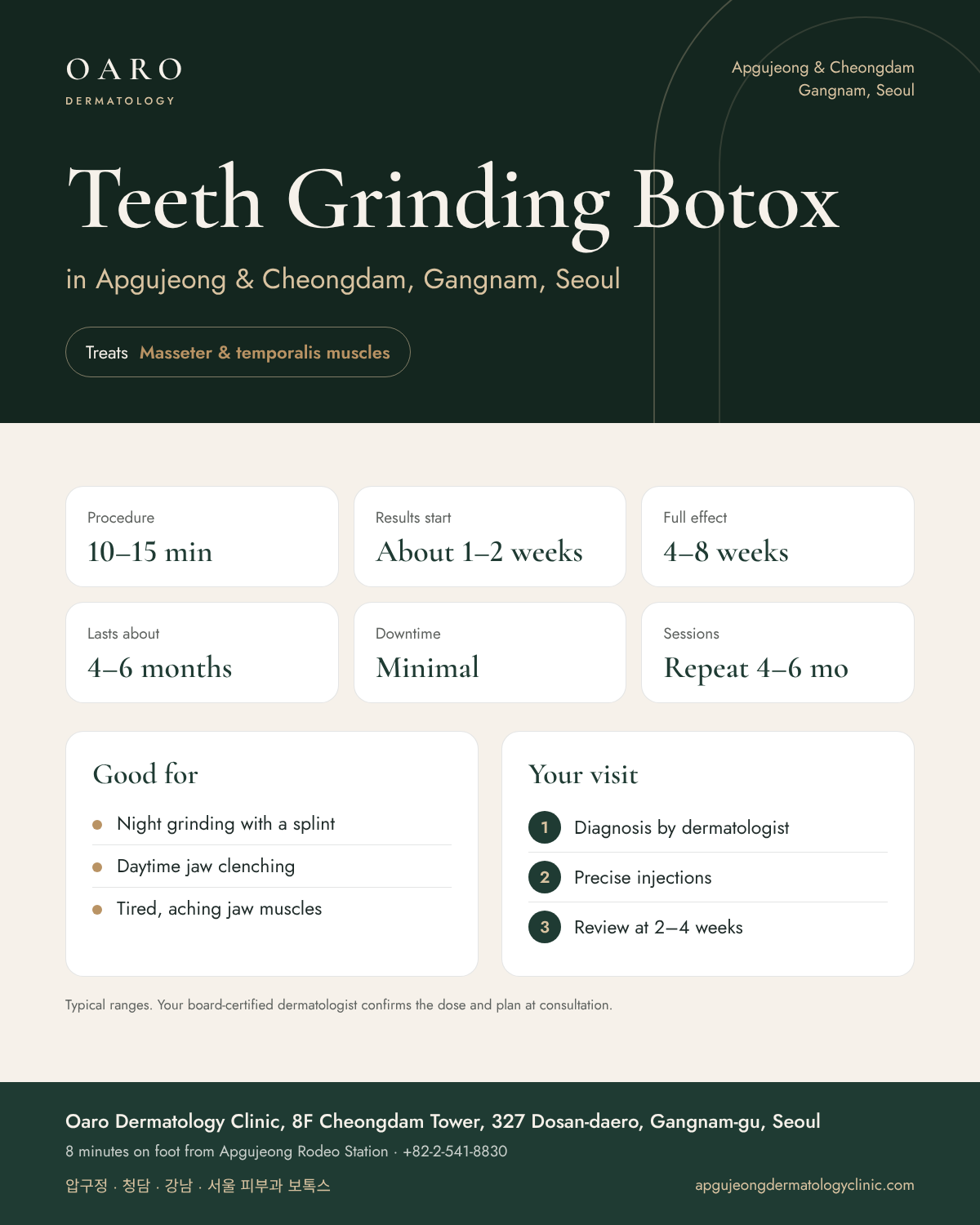
Your treatment on one page
This infographic sums up the treatment the way our dermatologists explain it in consultation: the muscle or gland being treated, how long it takes, when results start and how long they usually last, plus the three steps of your visit. Save it to your phone before you come in, or share it with someone planning the trip with you.
- Typical timings, downtime and number of sessions
- Who the treatment suits, in plain words
- Your visit: diagnosis, precise injections, review at 2–4 weeks
Oaro Dermatology Clinic · 8F Cheongdam Tower, 327 Dosan-daero, where Apgujeong meets Cheongdam in Gangnam, Seoul · 8 minutes on foot from Apgujeong Rodeo Station
Overview
What is teeth grinding Botox?
Bruxism means grinding or clenching the teeth, during sleep or during the day, often without noticing. Over time it can cause worn or chipped teeth, aching jaw muscles, tight temples on waking and an enlarged masseter that makes the lower face look square. Causes vary and can include stress, sleep patterns and bite factors, so bruxism is managed from more than one angle.
Toxin injected into the masseter, and sometimes the temporalis, reduces how hard those muscles can contract. The urge to grind may remain, but the force behind it is lower, which can mean less jaw aching and less pressure on the teeth. Because the masseter also shrinks with less use, many patients notice a gradually slimmer jaw as a side effect.
How teeth grinding Botox works at Oaro
At Oaro Dermatology Clinic, where Apgujeong meets Cheongdam in Gangnam, Dr. Chang-hyun Kim treats bruxism as a medical concern first. He examines muscle size and tenderness, asks what your dentist has advised, and works alongside your dental care rather than replacing it. Jaw joint pain, locking or a change in bite should be assessed by a dentist or oral and maxillofacial specialist. If jaw shape is also a goal, see masseter Botox; for tension at the sides of the head, see temple Botox.
Why patients choose Oaro for Botox
- Dose and injection points set by a board-certified dermatologist after examining your muscles
- Korean-made toxins such as Nabota and imported brands explained honestly, with units compared fairly
- Written aftercare and a review at 2–4 weeks, in person or by message
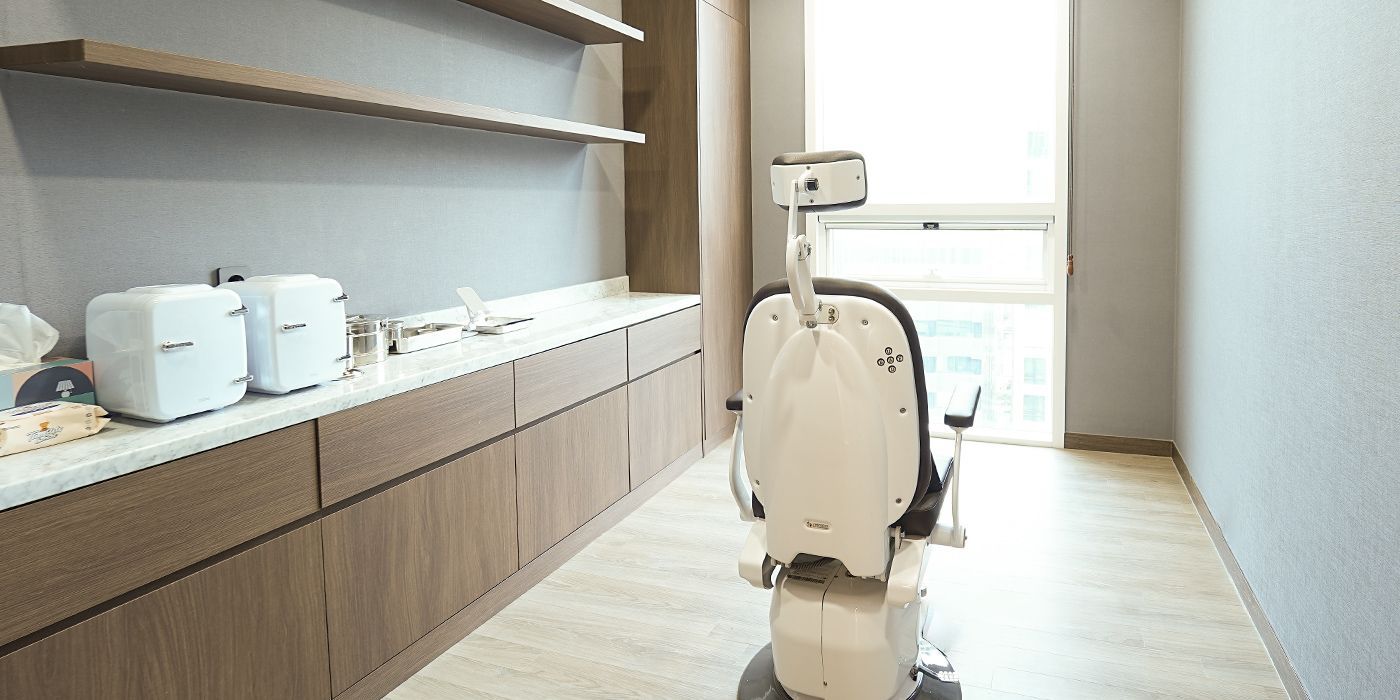
- Private 1:1 rooms in Cheongdam Tower, 8 minutes from Apgujeong Rodeo Station
- English-friendly coordination and clear, itemised pricing
Treatment goals
Common goals for teeth grinding Botox
Less forceful grinding at night
Sleep grinding can be loud enough to wake a partner and strong enough to wear enamel. Relaxing the masseter lowers the force of each grind, which may reduce wear on teeth and dental work when combined with a night guard.
Fewer tired, aching jaw muscles
Many people with bruxism wake with a stiff jaw or feel their cheeks ache after long days. Once the muscle is less overactive, that tightness often becomes milder, although it varies from person to person.
Help with daytime clenching
Clenching at a desk, while driving or during exercise is common. Toxin can reduce the strength of that clench, alongside simple habits such as keeping the teeth slightly apart.
Easing tightness at the temples
When the temporalis is also overworking, patients often describe a band of tension at the sides of the head. Including the temples may help, but frequent or severe headaches should be medically assessed first.
Your visit
What to expect
1. Consultation & diagnosis
Your dermatologist feels the masseter and temporalis while you relax and clench, and asks about tooth wear, jaw clicking, snoring and sleep. Heavy snoring or waking unrefreshed is worth mentioning, as grinding is sometimes linked to sleep-related breathing problems that deserve their own check. Bring your dentist's notes if you have them.
2. Treatment
After cleansing, a few small injections are placed into each masseter, and into the temporalis if needed. It takes about 10–15 minutes, and ice or numbing cream is available. The dose is set by the dermatologist after examining muscle size and strength, and how much chewing strength you want to keep.
3. Aftercare & follow-up
You can return to normal activities straight away. Clenching force usually eases within one to two weeks, and the masseter slims gradually over four to eight weeks. A review at two to four weeks, in person or by message, checks comfort and symmetry.
Cost guide
Teeth Grinding Botox cost in Seoul
Cost depends on whether only the masseter or also the temporalis is treated, the size and strength of the muscles, and the toxin brand. Units vary between brands and are not directly comparable, so compare prices per area. Korean-made toxins such as Nabota are widely used in Seoul and are less expensive; imported brands usually cost more. These are typical ranges in Seoul clinics.
| Option | Typical range (KRW) |
|---|---|
| Masseter (both sides), Korean-made toxin | ₩80,000–₩250,000 |
| Masseter (both sides), imported toxin | ₩200,000–₩500,000 |
| Masseter + temporalis, Korean-made toxin | ₩150,000–₩450,000 |
| Masseter + temporalis, imported toxin | ₩350,000–₩800,000 |
Exact pricing is confirmed at consultation after examination.
Aftercare
Aftercare
- Avoid pressing on or massaging your jaw and temples for the rest of the day, and skip facial massage over the area for about two weeks.
- Keep wearing your night guard or splint exactly as your dentist recommends; toxin does not replace it.
- Choose softer foods and avoid chewing gum or very chewy foods for a few weeks if your jaw feels tired.
- Avoid strenuous exercise, saunas and alcohol until the next day; a cold compress helps if a small bruise appears.
- Message the clinic if your smile looks uneven or chewing feels unusually weak, and seek urgent medical care for any difficulty swallowing, speaking or breathing.
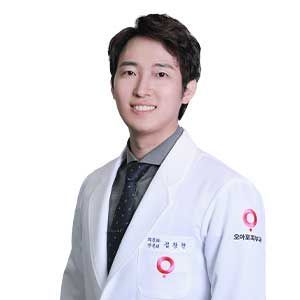
Medically reviewed by
Dr. Chang-hyun Kim, M.D.
Board-certified dermatologist and Representative Director of Oaro Dermatology Clinic, Cheongdam. Member of the Korean Dermatological Association, the Korean Filler Society, the Korean Society for Dermatologic Laser and the Korean Anti-Aging Society.
FAQ
Frequently asked questions
Will Botox cure my teeth grinding?
No. It reduces the strength of the muscles, so grinding and clenching are less forceful, but it does not change why the habit happens. Many patients in Seoul use it as one part of a plan that includes a night guard, stress management and attention to sleep. When the effect wears off, the muscle gradually regains strength.
Do I still need to see my dentist?
Yes. Your dentist checks tooth wear, fillings, crowns and your bite, and can make or adjust a night guard. Show your dentist your written aftercare so they know what was done.
Will my face look slimmer, and what are the side effects?
Usually yes, gradually, because the masseter becomes smaller. If you would rather keep your jaw shape, tell the doctor, who can adjust the plan. Possible side effects include bruising, mild swelling, headache and temporary chewing fatigue; uncommonly, toxin spreading to nearby muscles causes a slight smile asymmetry that wears off.
Who should avoid or postpone teeth grinding Botox?
Postpone treatment if you are pregnant or breastfeeding or have an infection at the injection site. It is not suitable with neuromuscular disorders such as myasthenia gravis or a known allergy to toxin ingredients. Tell the doctor about all medicines, especially aminoglycoside antibiotics and blood thinners, and any planned dental surgery.
Can I fit treatment into a trip to Gangnam?
Yes. The appointment is short, and our clinic between Apgujeong and Cheongdam is about 8 minutes on foot from Apgujeong Rodeo Station. Book early in your stay so you may feel the first easing of clenching before you leave. Flying the next day is generally fine, and follow-up continues by message once you are home.
Explore related care
Often considered together
- Masseter Botox — the same muscle treated with jaw shape in mind
- Temple Botox — for clenching tension at the sides of the head
- Jawline Slimming — options for a softer lower-face outline
- Masseter Botox in Korea — our guide to jaw muscle treatment
- International Clinic — English-friendly care for visitors to Seoul
- Contact & Booking — book a consultation in Apgujeong, Seoul
Private 1:1 consultation
Plan your Botox with a board-certified dermatologist in Apgujeong
Tell us what you would like to change. We will examine the muscles involved, explain which toxin and dose suit you and give you a written plan with clear pricing. English-speaking coordinators help international patients visiting Cheongdam, Gangnam and the rest of Seoul.